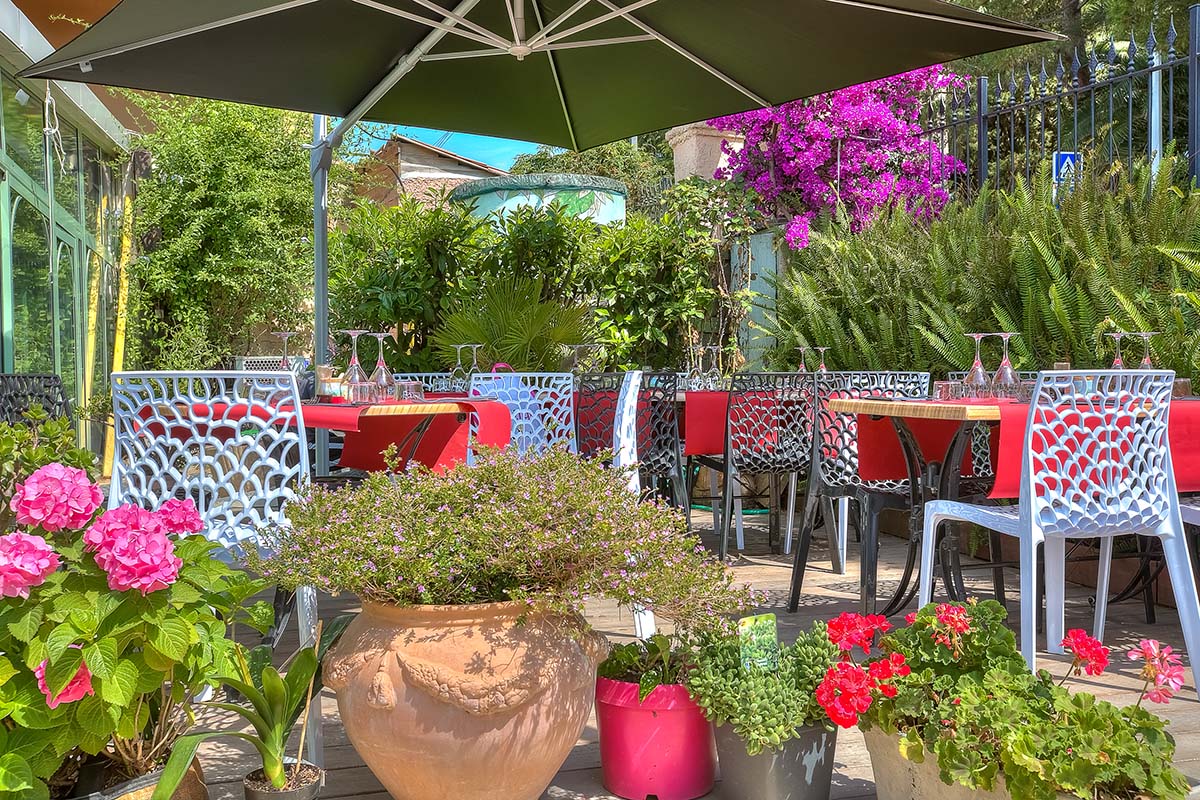
The seafront sells the view and charges for it. The city eats one street back, in the bistros of the old town and the quiet Belle Époque grid of Carabacel. A simple test sorts the theatre from the table: would a Niçois confidently bring a guest here, or only a tourist?
There is a line in Nice you can almost draw with a ruler. On the seaward side of it, the Promenade des Anglais, prices climb, kitchens coast and the food is an afterthought to the panorama. One street inland, the same money buys cooking that locals actually queue for. The test we apply is simple and unkind: would a Niçois confidently bring a guest here, or is this only ever a tourist's table?
Inside the old town the answer is a short list of bistrots that book out for good reason. Le Bistrot d'Antoine, a Michelin Bib Gourmand on rue de la Préfecture, runs a daily chalkboard of old-fashioned pork casserole with creamy polenta, knife-cut tartare and grilled veal kidney at fair prices and tightly packed tables. Olive & Artichaut near Place Rossetti rewrites a tiny menu around the market each day from its open kitchen, also Bib-listed and gone within a week of booking. Le Comptoir du Marché works the same market-driven, two-room formula on rue du Marché, changing with the produce rather than the tour buses.
Step north into Carabacel and the register shifts to residential. This is the elegant Belle Époque grid between Masséna and the Paillon, where Le Bistrot de Gillou cooks convivial, seasonal French plates for regulars on rue Alberti, with no gimmickry and no view to sell. These are the rooms that survive on repeat custom, which is the only audit that matters.
The harder question is whether the seafront is ever worth it, and the honest answer is: in exactly two cases. Le Chantecler, inside the Negresco, is the one genuinely serious table on the Promenade, where Meilleur Ouvrier de France Virginie Basselot cooks a Michelin-starred Mediterranean menu that has nothing to do with the beach-club trade below. It earns its address rather than trading on it.
The other exception lies east, on the Cap de Nice rocks below Mont Boron, where Coco Beach has grilled Mediterranean fish and lobster over a log fire since 1936, with bouillabaisse to order, on a bare-wood terrace watching the Corsica ferries leave. It is a working fish restaurant with a real kitchen, not a sun-lounger operation, which is precisely why it is not on the Promenade at all.
The rule that emerges is almost geographic: the closer a kitchen sits to the postcard, the harder it has to work to earn your trust, and the fewer manage it. Walk one block back, or one headland east, and the city starts cooking for itself again.