Athens has the press and the islands have the postcards, but Thessaloniki has the kitchens. A city built by refugees and merchants where the meze is a language and lunch is an argument worth having.
Ask an Athenian where to eat well in Greece and, after a defensive pause, the honest ones say it: go north. Thessaloniki — Selânik to anyone raised on the Ottoman map, where it was the empire's second city for centuries — is the country's true table. Not because it has the most starred rooms, but because eating here is woven into the hour-by-hour life of the place in a way Athens monetized away and the islands flatten into sunset-priced calamari.
The reason is history, and it is not subtle. This was a city of Sephardic Jews, of Greeks, of Ottoman Muslims, of Armenians and Slavs, layered for four hundred years; then, after 1922, the great rupture brought a flood of Greek refugees from Asia Minor and Pontus, people who arrived with nothing but their recipes. What they carried in their heads rebuilt the city's palate overnight: the peppers, the cumin, the yogurt, the soujouk, the obsession with a properly built meze. Thessaloniki eats like a place that remembers being somewhere else.
You taste the argument most clearly at the new-wave rooms that have made the city a genuine destination this decade. Charoupi in Ladadika is the standard-bearer — a modern Cretan kitchen that treats the island's wild greens, carob, and graviera with the seriousness Copenhagen reserves for foraged moss, but without the self-regard. It is refined and it is delicious, and crucially it tastes of a specific place rather than of a trend.
A few streets over, Mourga is the chef-driven seafood room that locals name first when they want to impress a visitor without overspending: a short blackboard menu dictated by what the morning boats and the central market gave up, poured against a list of Greek natural wines that has quietly become one of the best in the country. There is no spectacle here, only competence so total it reads as confidence.
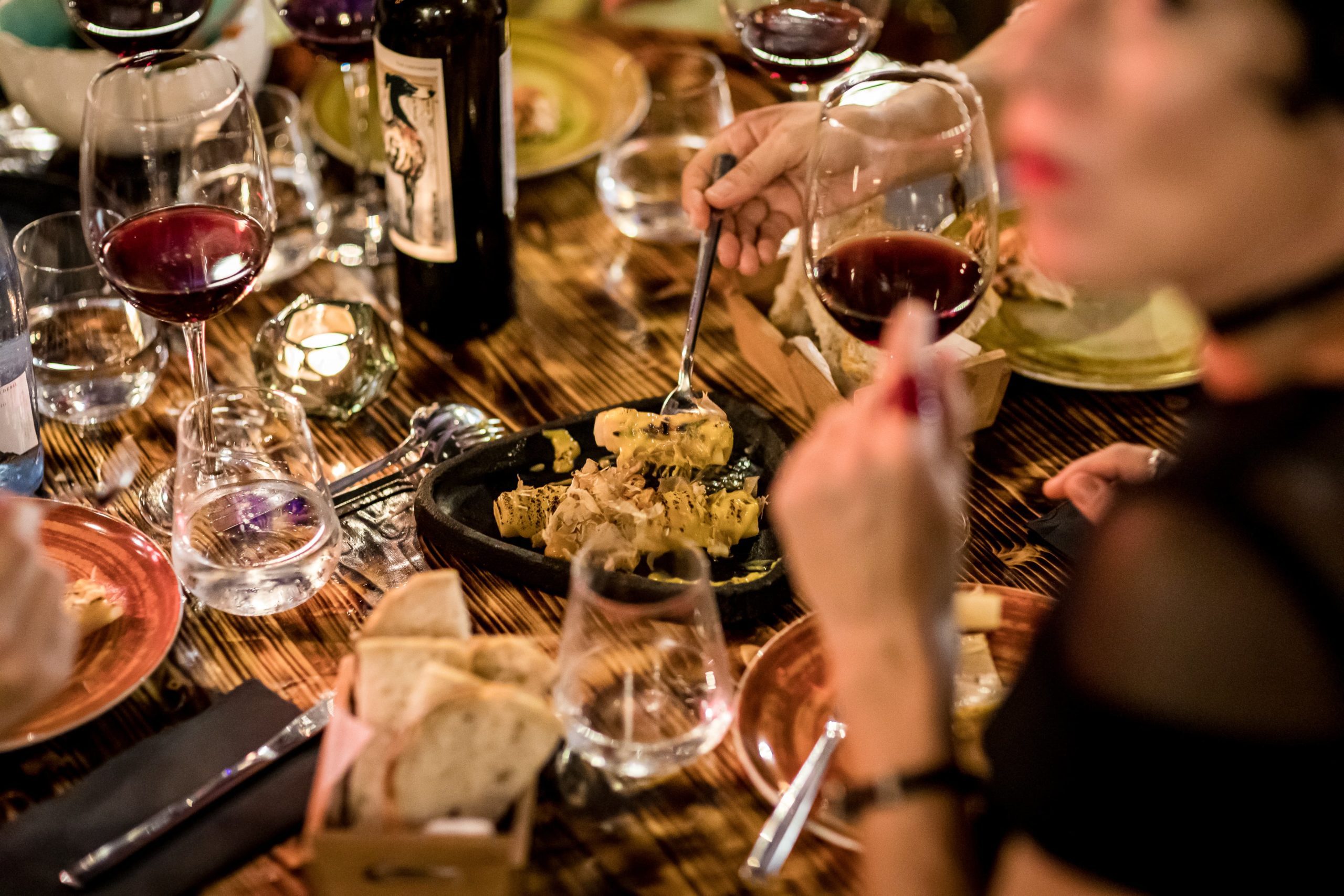
Then there is Deka Trapezia near the White Tower, which takes the meze — the small shared plate that is the actual unit of Greek eating — and rebuilds it with modern technique and a creative streak, ten tables of people working through a dozen little dishes and a chilled tsipouro. SinTrofi in Ladadika pushes further into zero-waste cooking and natural wine, proving the city's avant-garde is not imported but grown from the same market stalls everyone else shops.
But the case rests, finally, on the fact that the old guard never fell. Ouzeri Tsinari has poured ouzo under the same plane tree in Ano Poli since the nineteenth century, a survivor of the upper town that the great fire of 1917 spared. Diagonios still grills the soutzoukakia — those cumin-and-garlic meatballs in red sauce that are pure Asia Minor — exactly as it did generations ago. In Athens the institutions become museums; here they are still where you have lunch.
That is the whole argument. A food capital is not a place with the best single meal — it is a place where eating well is the default condition, available at every price and hour, carried by memory and renewed by a young generation that respects it. By that measure the title is not even close. It belongs to the north.