Türkbükü is not a place so much as a daily timetable — read the hours correctly and the bay opens to you; read them wrong and you have wasted a season.
Türkbükü works on hours, not addresses. The bay is small enough that everyone overlaps in the same dozen rooms across the day, and the people who summer here read the timetable the way Istanbulites read traffic — instinctively, without checking. Arrive at the wrong moment and even the best table feels off. Arrive at the right one and a beach platform you walked past at noon becomes the centre of the evening by eight.
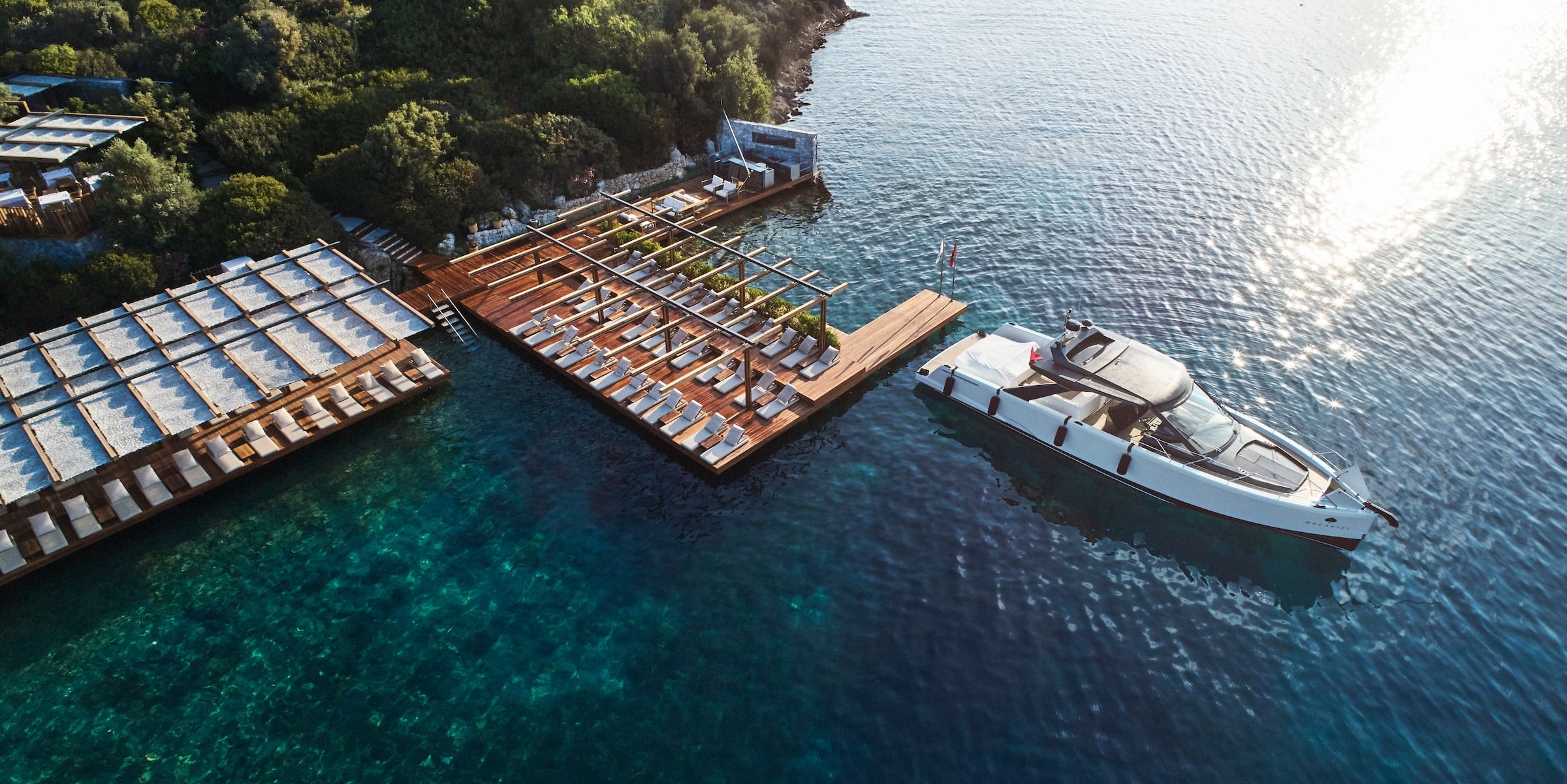
The morning belongs to the boats and to almost no one else. The iskeles are quiet, the sun-loungers are still being arranged, and the kitchens are running on prep time. This is the hour to walk the seafront, to swim from the rocks below Maçakızı before the first guests are awake, to drink coffee somewhere unfussy and read the day's papers. The bay is at its most beautiful in this window and at its most empty. Most visitors miss it entirely.
Late morning to mid-afternoon is the long lunch. The bay's iskele tables fill slowly with the kind of company that has no plans for the next four hours. Boats begin to arrive at the iskeles and tie up two and three deep — Maçakızı's pier becomes a small floating village by one o'clock. Lunch here is not a meal so much as a position; you take a table and let the day pass through it. The fish is whole, the wine is cold, the conversation drifts toward who is in town and who is not.
Five to seven is the bay's golden window. The light flattens, the sea goes still, and Türkbükü performs its daily piece of theatre: everyone moving from a beach platform to a shower to a dinner table, the streets briefly busy with damp-haired arrivals. This is when you walk the iskele between Lacivert and Macakızı, when the cocktails at DAZE or Galia hit exactly right, when Scorpios upshifts from afternoon lounge into evening set. The hour is short. Use it deliberately.
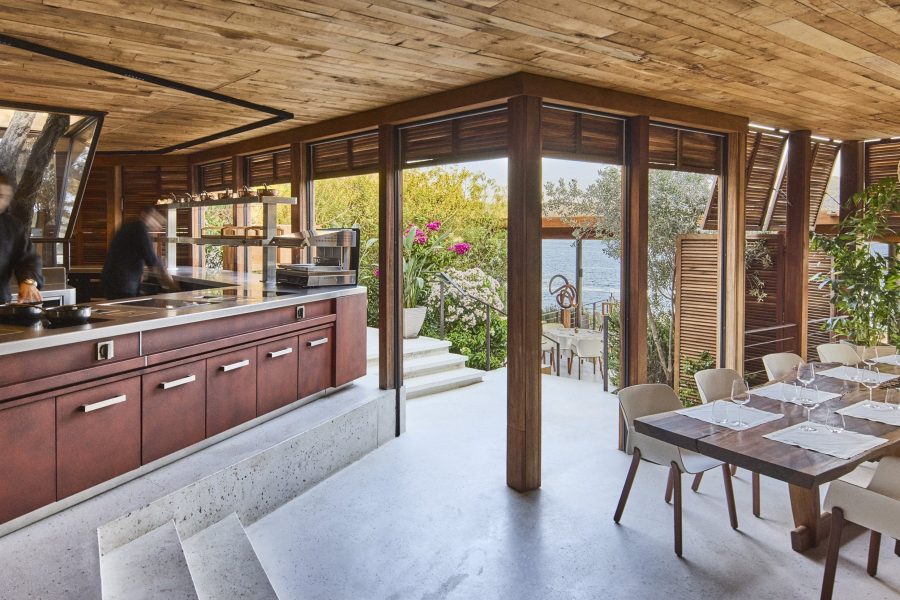
Dinner runs late and at two speeds. The classical room — Lacivert under the bougainvillea, Ayla on the Maçakızı hill — keeps the long, slow Aegean tempo: many small plates, a single fish for the table, hours of conversation. The contemporary room — Hakkasan, Roka, Kurochan, Gigi — runs faster and louder, with imported chef names and tasting-led menus. Locals tend to alternate between the two across a week. Doing one or the other every night is a category error.
After midnight the bay reorganises itself one more time. Scorpios is where most of Türkbükü ends up by one a.m. — the music programmed by people who think about it seriously, the floor populated by a crowd that has been in motion since lunch. The walk back to the hotel is along a bay that has gone quiet again, the boats lit at anchor, the water black and absolutely still. By two-thirty the only sound is the rope on a mast.
What Türkbükü teaches, if you let it, is that a good day in Bodrum is not a list of restaurants. It is a sequence of hours, each one belonging to a different room, each one demanding to be honoured in its own light. Get the rhythm right and a single July day can hold a swim, a long lunch, a sunset cocktail, a quiet dinner, and a late hour at a club — without ever feeling rushed. That is the bay's particular gift, and it is the reason the same families come back every summer.