Every Istanbul visitor to Berlin asks the same question. Is the döner the same? The honest answer: it is a different format. Whether the Berlin variant is worth the visit depends on which addresses you go to and in what order.
The first question every Istanbullu asks about Berlin food is the döner question. The visitor's instinct is reasonable: if the form was reportedly invented in Berlin in the 1970s by Anatolian operators (the Aygün family on Adalbertstraße from 1971, Kadir Nurman at Bahnhof Zoo from 1972), and if the form has since moved through every European city's Imbiss culture, what is the original supposed to taste like? The answer requires sitting through five addresses in a specific order, and the conclusion is not what most visitors expect.
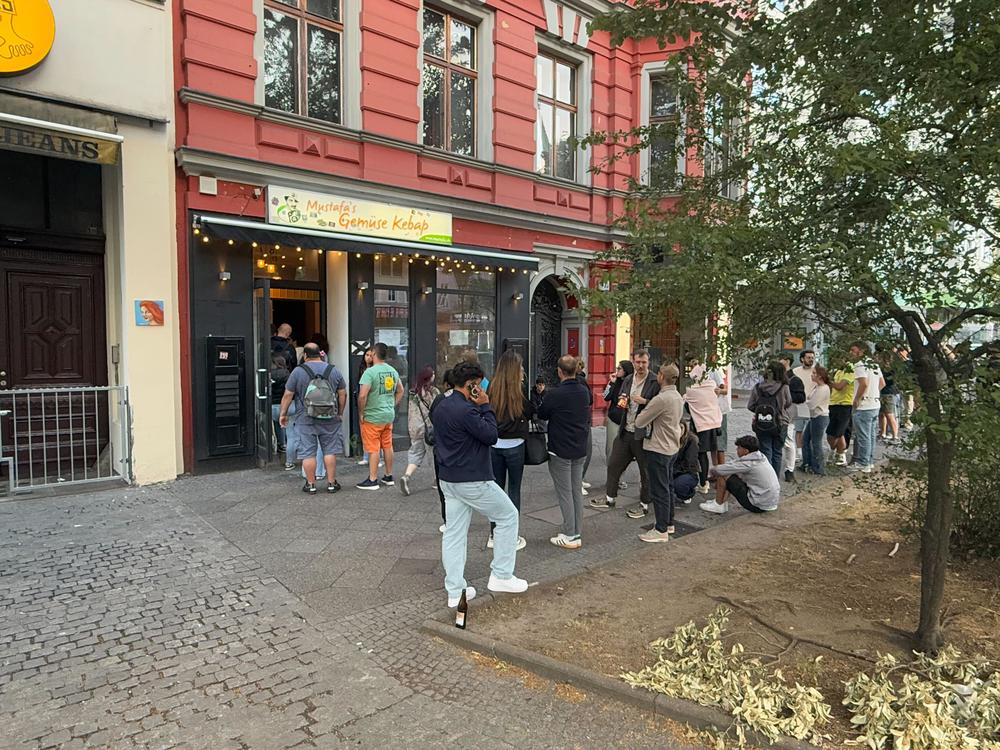
Start with Mustafa's Gemüse Kebap on Mehringdamm — the queue out the door is the room. The vegetable-and-feta variant the operators built (roasted aubergine, courgette, potato folded into the bread with chicken, plus feta) is the address most-photographed and the marker for what Berlin döner has done with the form. The wait is twenty to forty minutes; go on a weekday morning at 10:30 or after 23:00 to halve it. The flavour register is bigger than the Istanbul variant — more vegetable, more feta, less direct meat-and-herb argument. This is the introductory tasting.
Walk thirty seconds across the street to Curry 36. This is not döner, this is Currywurst — the West-Berlin sausage variant that pairs with döner the way Istanbul's lahmacun pairs with kebap. Order Currywurst ohne Darm (without skin, the West variant) and Pommes Schranke (mayo and ketchup). The point is the format pair: Berlin's two iconic Imbiss formats are next door to each other on the same Kreuzberg block and the audience reads them together.
Next, take the U7 to the Kottbusser Tor station and walk fifteen minutes to Hasir on Adalbertstraße. This is the historical-origin claim — the Aygün family operated the Berlin döner-im-Brot variant from this address from 1971. Hasir today is a sit-down Anatolian-Turkish kitchen rather than a takeaway counter; the döner is on the menu but the lamb-grill and meze programme are the meaningful parts. Order the döner here as a historical exercise. Order a meze and a lamb-grill plate as the actual meal. The takeaway is that the Berlin döner-im-Brot variant is the historical-origin claim's defendant, but the Anatolian-grill kitchen the operators have since built around the format is what makes the trip worth making.
The fourth address is Doyum Grillhaus on Admiralstraße, three minutes' walk from Hasir. This is the Anatolian-ocakbaşı the audience recognises from Istanbul — open-flame charcoal grill, lamb adana, lahmacun, the meat-and-aubergine kebap formats served in the format Anatolian-Berlin operators built rather than the Berlin-döner Imbiss format. The kitchen is the marker; the room is loud, the queue out the door on weekends. The audience reference here is the point — Doyum demonstrates that the Anatolian-Berlin culinary case for what serious-ocakbaşı looks like in this city has been made.
Cross the canal to Neukölln and walk down Sonnenallee to one of the dozen Lebanese-Syrian-Turkish bakeries that opened along this corridor since 2015. This is the post-2015 wave — the operators who came after the Syrian arrival and built a parallel format alongside the older Anatolian-Berlin establishment. The breads, the manakish, the labneh, the pickled vegetables read as Istanbul's Tarihi Sultanahmet Köftecisi corridor's Levantine cousin. The fifth address depends on what is open the day you walk; the corridor itself is the destination and the bakeries change quickly. This is the Berlin-Levantine variant the older Anatolian register did not produce on its own.
The conclusion the five-address tour pushes the audience toward is not 'Berlin döner is better than Istanbul döner'. It is the harder, more accurate observation that Berlin döner is a different format — one shaped by the diaspora the operators built around it, by the West-Berlin Imbiss culture the format had to compete with, and by the post-2015 Syrian wave that has since added its own register. The Istanbul variant is the form's older argument; the Berlin variant is what happens when the form is exported, naturalised over fifty years, and then layered with new arrivals. Both are correct. The trip rewards the audience that comes to Berlin curious about what the form became, rather than the audience that comes to ask whether the original is being rendered correctly. The original is in Istanbul. What Berlin does is something else, and worth going to see on its own terms.