Past the wineries and the windsurfers, the Çeşme peninsula thins out into fishing hamlets and vineyard lanes where the pace finally drops. At Ildırı you eat beside a 2,700-year-old Ionian city; in the Ovacık fields you eat what was cut that hour. This is the peninsula's quiet half.
There is a version of the Çeşme peninsula that almost no one on a long weekend ever reaches, and it begins where the asphalt narrows and the signage stops. North of the wineries, past the windsurf bays, the land opens into low hills, fishing hamlets, and vineyard lanes where a tractor is more common than a rented SUV. This is the slow half of the peninsula, the edges the village crowd never has time for, and it is where the Aegean still keeps its older, quieter face.
Ildırı is the headline. The village sits on the water at the foot of ancient Erythrai, one of the twelve cities of the Ionian League, founded the better part of three thousand years ago. The hillside theatre still looks out over the bay and the scatter of islands offshore, and you can walk the acropolis in the late afternoon with almost no one else there. Then you come down to the harbour for dinner. Ali'nin Yeri has been a family balıkçı on the water's edge of Erythrai for three generations, the kind of fish house where the catch is local, the meze is unfussy, and the setting, antique city behind you and the takımadalar in front, does work no designer could buy.
For the hour before dinner, Agora Cafe holds the best bench in Ildırı, a stone terrace at the gate of the ancient city, the islands laid out across the water, the sun going down behind them. It is a view café and it knows exactly what it is: a place to sit with a coffee or a glass of wine while the light does its work over Erythrai, before you walk down to the harbour to eat. To stay the night and let the village empty around you, Herakles Butik Otel is a 322-year-old Hellenistic stone house steps from the ruins, the rare room where you wake up inside the history rather than visiting it.
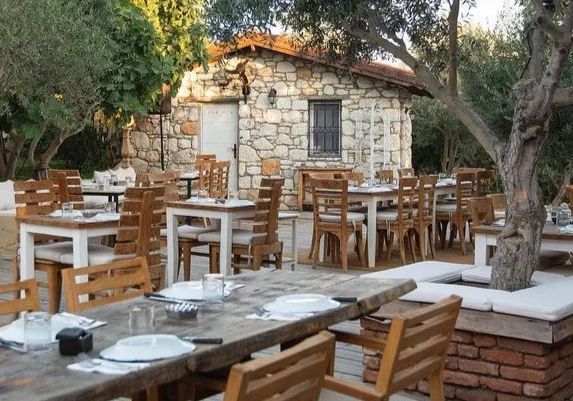
Ovacık, on the southern side of the peninsula, is the other quiet edge, and its register is the field rather than the sea. This is the vineyard belt, and tucked among the vines are kitchens that have built their whole identity around the half-kilometre between the garden and the plate. Ova Sofra is a twenty-seat vineyard-house table of slow Ovacık cooking, the kind of address that does not advertise and does not need to, where the menu is whatever the kitchen has and the evening lasts as long as it lasts. Yeni Yer, hidden in the same fields, does wood-fire slow food on the same principle: a fire, a short menu, and produce that was growing nearby that morning.
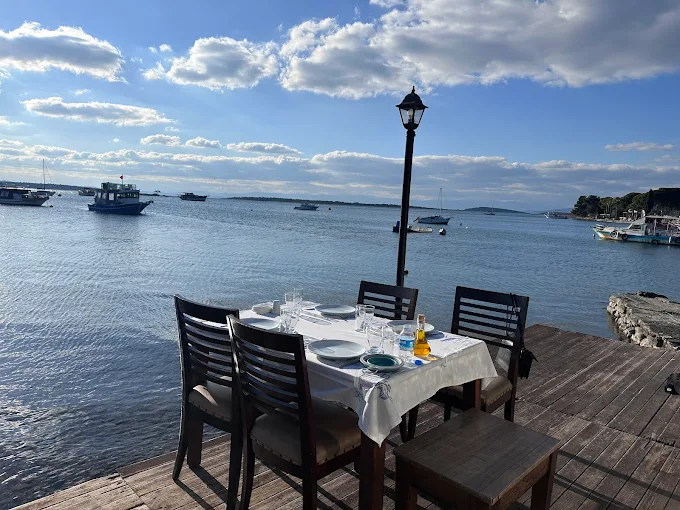
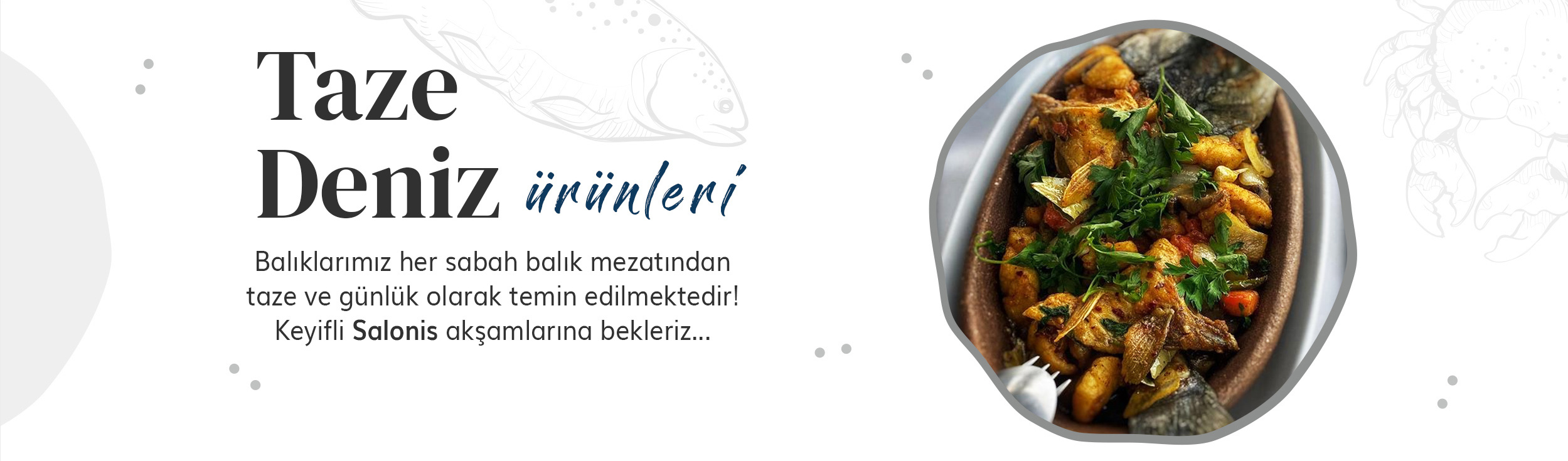
Further down the coast, Çiftlikköy gives the slow Aegean its seafront. Salonis, run by the Yılmaz family since 2009, is the quietest fish table on the peninsula, a seafront room looking straight across the strait to Chios, where you can have a long, unhurried dinner without ever raising your voice over a sound system. There is no system. There is the water, the islands of the Greek coast close enough to read the lights of, and a kitchen that does the simple things correctly. It is the antithesis of the marina, and it is deliberate.
The peninsula's quiet edges reward a particular kind of traveller: the one who treats the drive as part of the meal, who is content to spend an afternoon among ruins with no audience, who would rather eat what a single kitchen grew than choose from a long menu. Mimas Balık over at Mordoğan, on the working iskele the yacht trade has not reached, belongs to the same world, a village fish counter facing the open sea. These places will not fill your feed. They will, if you let them, give you the Aegean the peninsula had before it learned to perform: slower, plainer, and considerably harder to forget.