Long before the marina and the rosé, this was a fishing coast — and its truest meal is still six sardines threaded on a cane and roasted over a boat full of fire on the sand.
Strip away the glamour — the helicopters, the brand logos, the August crush — and you are left with what Marbella was for centuries: a hot, poor, sun-bleached fishing village on the Costa del Sol, where the men went out for sardines and the women cooked them on the beach. That world is mostly gone. But its central ritual survives, and it is the single most authentic thing you can eat here.
The espeto is sardines — usually six — skewered on a length of cane and planted at an angle beside a long trough of burning olive wood, traditionally an old wooden boat half-filled with sand to hold the embers. The fish roast in the radiant heat, never touching a grill, the skin blistering while the flesh stays sweet. You eat them with your fingers, with a squeeze of lemon and nothing else, ideally with the sea ten metres away. Los Sardinales out at Las Chapas is a proper chiringuito built around exactly this — a beach shack doing the espeto the way it has always been done, with the fire and the sand and the salt air doing most of the work.
What makes the espeto matter is precisely that it cannot be gentrified. There is no luxury version; a sardine on a cane costs almost nothing and a five-hundred-euro one would be a worse sardine. It is a democratic, peasant, deliciously stubborn dish, and it stands as a quiet rebuke to everything the marina is selling two coves over.
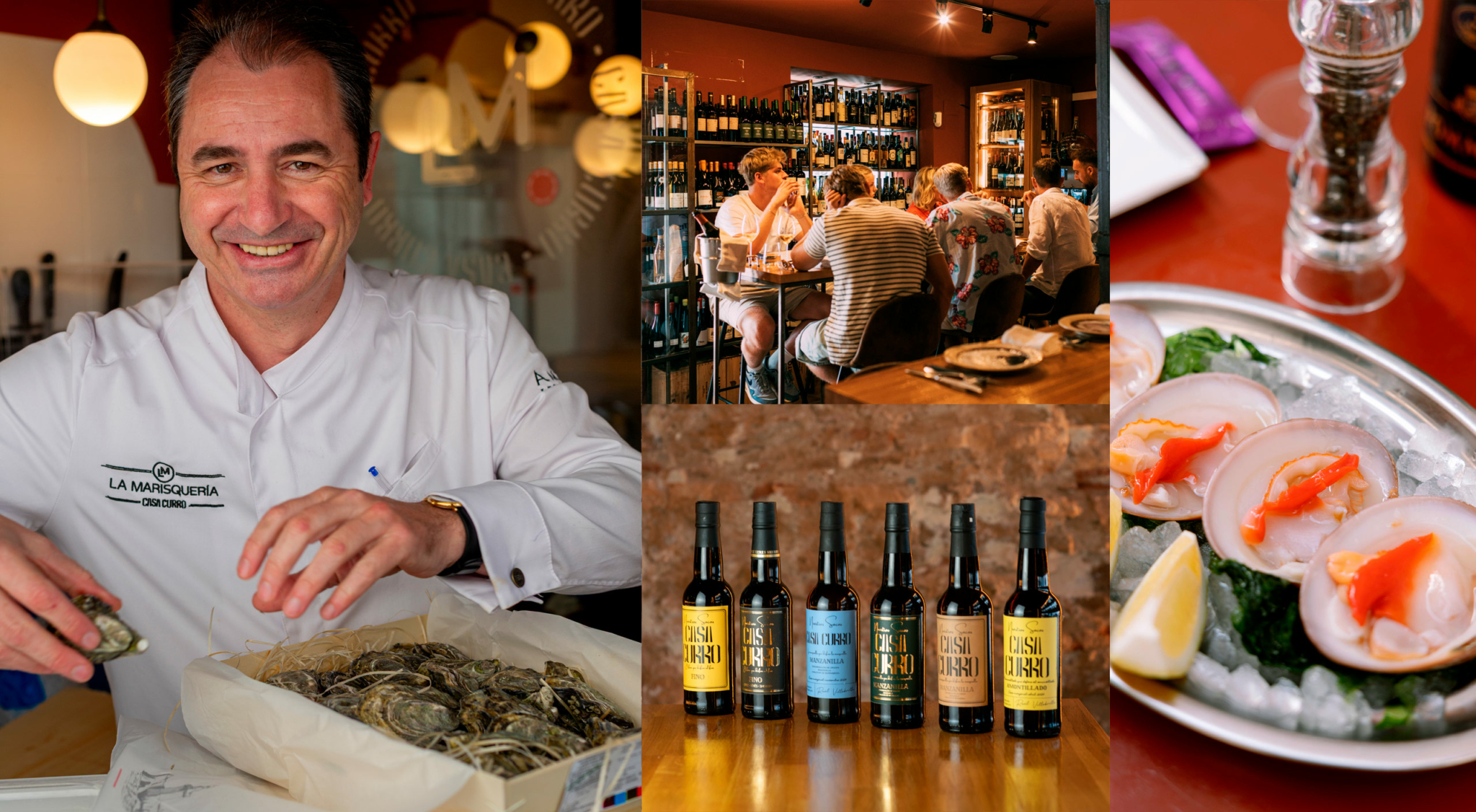
The same spirit runs through the town's old institutions, the ones that were feeding Marbella before anyone thought to make it fashionable. Bar El Estrecho has been pouring wine and plating Andalusian tapas since 1954, from a cramped Old Town corner that has outlasted every trend that ever washed through. Taberna Casa Curro works the same register — cured meats, a glass of something local, decades of muscle memory — the kind of family-run room where the recipes are older than the menu and nobody is performing for a camera.
Down in Nueva Andalucía, El Bigote keeps faith with the other half of the fishing tradition: the marisquería, the seafood house, where the catch is the whole argument and the cooking gets out of its way. This is the lineage the espeto belongs to — fish treated with respect rather than reinvention, a coast eating what the coast actually produces. Even a more polished Old Town room like Casa Eladio, family-run and seafood-led, is essentially this tradition wearing a slightly better jacket.
It is worth keeping one foreign accent in the mix, because the Andalusian table has always borrowed. La Taberna del Pintxo brings the Basque country's bar-top culture south — small bites lined up on the counter, eaten standing, paid for on an honour-ish system of toothpicks — and it has been so thoroughly absorbed into Marbella's eating habits that it now reads as local. The point of all of it is the same: that under the spectacle, this is still a place that knows how to feed people simply and well, and that the truest luxury here is a charred sardine eaten with your hands while the light goes orange over the water.