Munich has imported its Italian cooking the way it imports its operas — slowly, expensively, and with the conviction that doing it correctly matters more than doing it loud. The best rooms in the city for it are mostly in residential streets a tram ride from the centre, and the locals prefer it that way.
There is a particular kind of Munich Italian that does not exist anywhere else in Germany at quite this register. It is not the trattoria of Rome, the osteria of Bologna, or the brigade-driven Milan room — though it has borrowed elements from all three. It is the product of fifty years of Bavarian-Italian intermarriage, of Tyrolean wine on the list, and of a clientele that flies to Bologna for the weekend without making a fuss of it. The point of recognition is the room: white tablecloth, brisk service in the Bavarian sense, a wine list that goes deep on Alto Adige and Friuli before it leaves the German-speaking world. The food is not invented; it is correct.
Acquarello in Bogenhausen has been the canonical address since 1989, and Mario Gamba's kitchen still sets the city's expectation for what an Italian restaurant in a German metropolis ought to be. The dining room — Liberty-style mirrors, white linen, a Murano chandelier the size of a small car — reads as a directly transplanted Milan room from a particular era and is the better for it. The tasting menu runs the classics: ravioli of artichoke and Parmigiano, branzino in salt crust carved tableside, ossobuco with saffron risotto. Two Michelin stars, a wine cellar that runs to four thousand labels, and a clientele that has been booking the same Tuesday table for fifteen years. This is what locals mean when they say 'the proper Italian'.
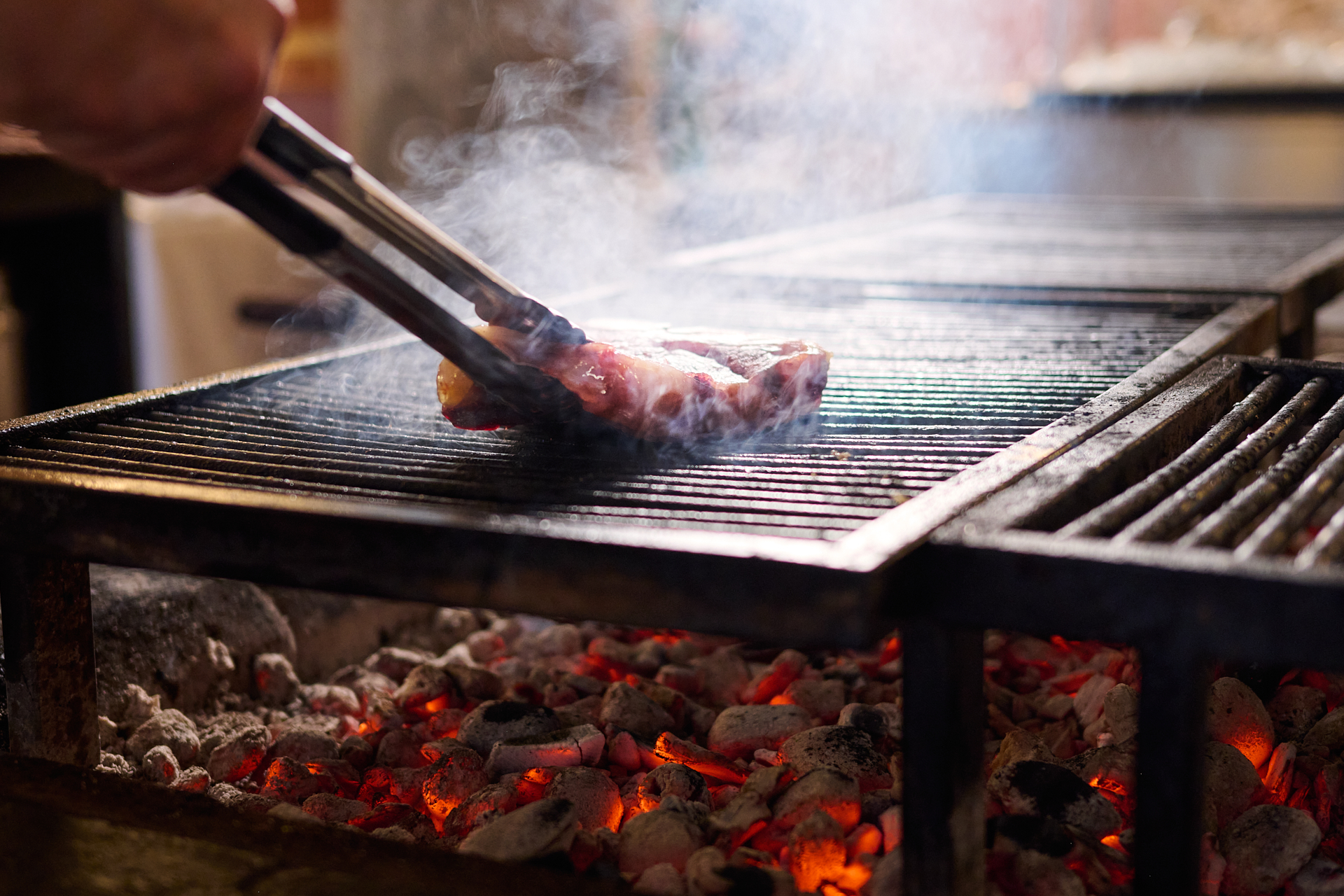
Schwabing has its own version. Trattoria La Fiorentina on Görresstraße, just off Hohenzollernstraße, runs a tighter format: open kitchen, twenty seats, a daily slate that depends on what arrived from the morning's Italian wholesaler. The bistecca alla fiorentina is the marker order — a kilo of Tuscan beef on the bone, charcoal-grilled, sliced for the table — and the room is built for it. The owners' Florentine family lineage is the entire programme; they import the meat directly and the pricing reflects it. This is not a value room. It is a conviction room.
Cooler still, and harder to find without an introduction, is Brenner Operngrill's Italian sister operation hidden inside the same Brenner stable complex behind the Residenz. The lunch grill is the famous room; the smaller pasta-and-grappa cellar that opens for dinner is the quieter, more focused programme. The pasta arrives twice-weekly from a single producer in Veneto. The grappa flight at the end of the meal is calibrated to teach the table about the seven distillers the room imports from. The Munich industrial families who do not want to be seen on Maximilianstraße eat here.
On the other side of the Isar, in Haidhausen, Mangostin's Italian-Bavarian crossover is a different kind of project — Asian-influenced Italian on the surface, but the underlying technique is straight from the Acquarello school. The truffle linguine in winter and the burrata-and-fig course in late summer are the markers. The clientele is half French Quarter expats and half Munich design industry; the room is one of the more interesting rooms in the city for the pace and the volume.
What unites these rooms is what they refuse to be. They are not the Italy-themed pizzeria with the operatic recordings. They are not the resort-Italian of the Alpine ski hotels. They are an immigrant cuisine taken seriously by a city that takes its imports seriously, set up to feed a clientele that knows the original well enough to demand it executed at the original level. The Istanbul cosmopolitan flying in for a few nights and asking for 'somewhere good for Italian' is the audience these rooms were built for. Acquarello on Tuesday or Wednesday for the destination booking; La Fiorentina on Thursday for the Florentine grill night; Brenner's pasta cellar for the Friday dinner if the trip extends. None of them are in the postcard zone. All of them are why the city's Italian register is what it is.