The distance between the menus along La Rambla and the way Barcelona eats at home is enormous. The real city eats at the market the morning it cooks, queues for a midday menú, and treats the neighbourhood table as a weekly habit, not an occasion.
The tourist trap is easy to define in Barcelona: a photo menu, a tout at the door, a paella the colour of a traffic cone, and a location within sight of either the Sagrada Família scaffolding or the Rambla's human current. The antidote is just as easy to define, even if it is harder to find, it is the place that buys at the market that morning and changes its menu by what it found.
In Gràcia, La Pubilla cooks honest, daily-changing Catalan dishes sourced straight from the Mercat de la Llibertat across the street, with a midday menu locals queue for. Canelons, market fish, a vegetable plate done with care and zero pretension, this is the weeknight bedrock. A few streets away, Berbena seats barely two dozen for chef Carles Pérez de Rozas's precise seasonal small plates and a fierce natural-wine list, a Bib Gourmand the neighbourhood books days ahead.
The Gothic quarter has its honest tables too, if you know which doors to open. Cafè de l'Acadèmia, a 1987 institution reborn under careful hands, plates esqueixada, meatballs, snails with romesco in a room of tiles and beams, with a terrace on Plaça de Sant Just that is one of the old town's best-kept seats. In El Call, La Vinateria del Call serves Iberian sharing plates against 160-plus Spanish wines in a candlelit room, the Gothic done the way locals do it.
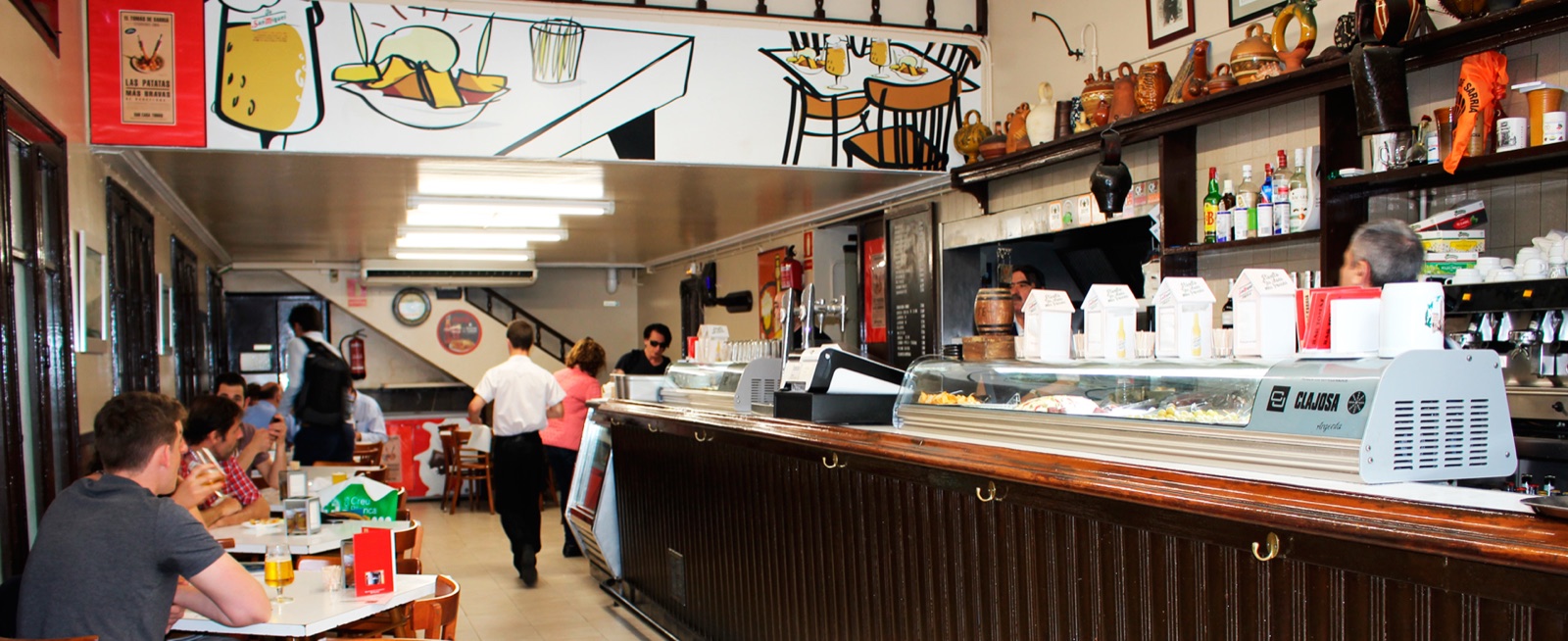
Uptown, away from any tour route, Sarrià keeps two quiet benchmarks. Vivanda turns the market into Catalan platillos with a leafy back garden that fills the moment the weather turns, while Bar Tomàs is a plain, bright corner bar that locals queue at lunchtime for what many swear are the city's finest patatas bravas, thanks to a guarded double sauce.
Near the Santa Caterina market, Casa Mari y Rufo has been the opposite of a tourist trap since 1981, a tiny, no-frills family room, cramped and noisy, beloved for market-fresh seafood and seasonal home cooking at honest prices. None of these rooms perform for a camera; they perform for the regulars who will be back next week.
The lesson is simple and unglamorous. Eat where the menu is short and in Catalan, where the market is close enough to smell, and where the same faces come back. The city that hides behind the postcards is generous to anyone willing to walk three streets past the crowd.