A generation of young Turkish chefs, trained in Copenhagen, London, and New York, is returning to Istanbul with global technique and Anatolian memory. What they are building looks nothing like what came before.
For most of its modern history, the Istanbul restaurant scene could be divided neatly into two categories: the traditional, meyhanes, lokantas, ocakbasis, kebab houses that had been doing the same thing for decades, and the international, which meant a particular kind of hotel restaurant serving French or Italian food to a clientele that associated fine dining with somewhere else. The space between these two poles was narrow and largely unexplored. That is no longer the case.
The shift began around 2015 with Turk Fatih Tutak, who returned from stages at Noma, Geranium, and The Fat Duck to open a restaurant built on the proposition that Turkish ingredients and Anatolian techniques could sustain a world-class tasting menu. The Michelin stars that followed confirmed what the dining room already knew: the food was extraordinary, not because it rejected tradition but because it understood tradition well enough to move beyond it. Tutak's influence on the chefs who came after him is difficult to overstate.
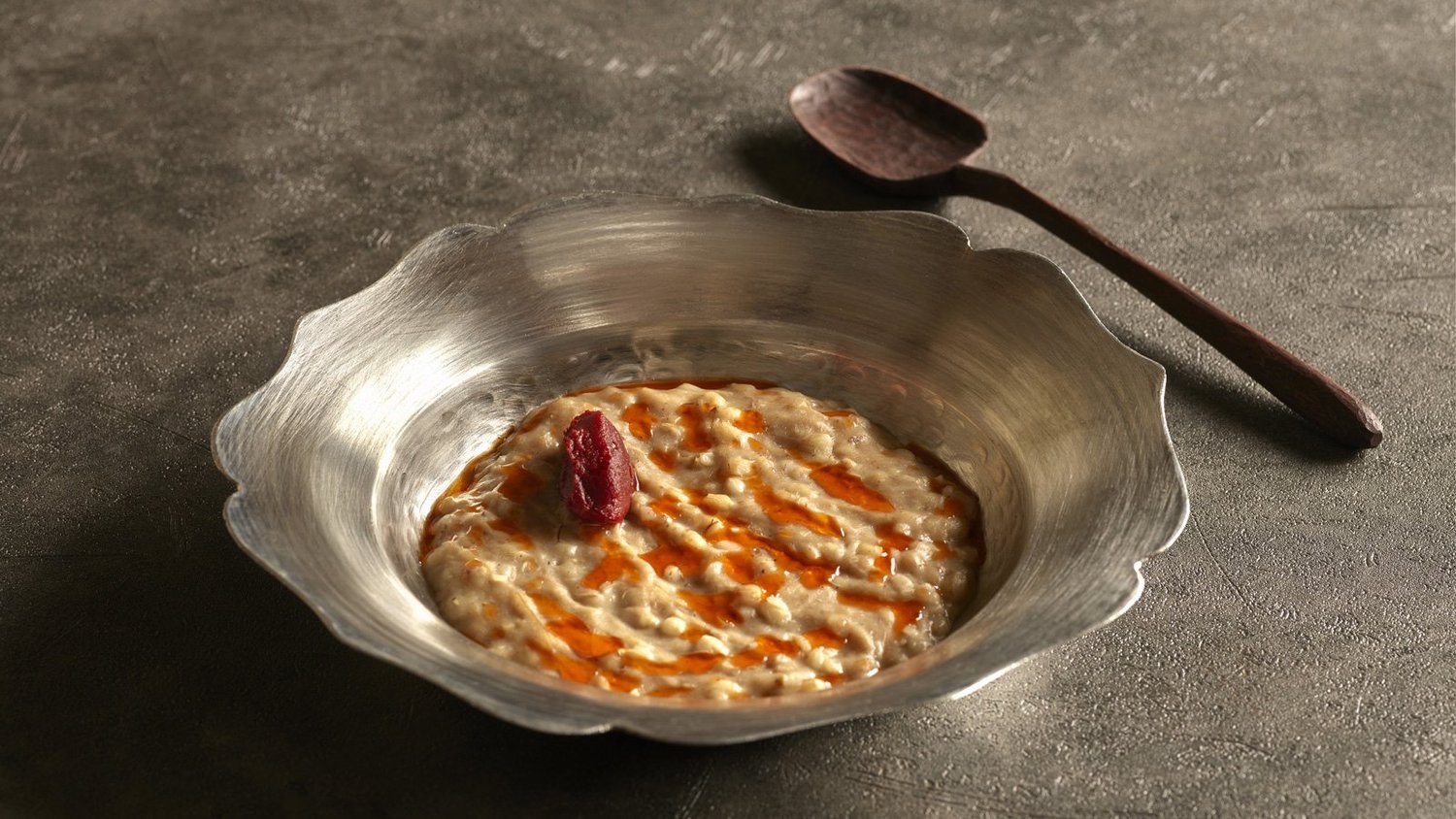
Herise Istanbul is perhaps the purest expression of the new generation's ambitions. Three tables, no menu, a single chef working in an open kitchen visible from every seat. The cooking draws on southeastern Anatolian grain traditions, the name itself refers to an ancient wheat and meat porridge, but the execution is precise, modern, and uncompromising. A Michelin star arrived within a year of opening, and reservations now require weeks of planning. It is a restaurant that could not exist in any other city, and that specificity is precisely the point.
The Red Balloon, which earned a Bib Gourmand in its first year, represents a different strain of the same movement. Where Herise is austere and intentional, The Red Balloon is generous and warm, a neighborhood restaurant with serious cooking, fair prices, and a wine list that favors small Turkish producers. The food is rooted in the Aegean and the Black Sea coast, and the kitchen treats its ingredients with a respect that borders on devotion. It is the kind of place you return to weekly, which is not something that can be said of most restaurants operating at this level.
Gun Lokantasi has built its identity around fire. The open hearth dominates the dining room, and everything, vegetables, meats, breads, even some desserts, passes through flame at some point during preparation. The approach sounds simple, even primitive, but the results are anything but: the char on a slow-roasted beet, the smoke in a lamb shoulder that has been cooking since morning, the blistered flatbread pulled from the coals and served with nothing but good butter. Alaf in Kuruçeşme takes the Anatolian thread further still, drawing on nomadic cooking traditions and presenting them in a setting that is deliberately spare, the food carries the weight, and the room stays out of the way.
What unites these restaurants is not a style or a cuisine but an attitude. The chefs behind them share a conviction that Turkish food, broadly defined, historically deep, regionally vast, is a foundation strong enough to build a world-class restaurant culture on, without borrowing prestige from Paris or Tokyo. They are not interested in fusion or novelty for its own sake. They are interested in the question of what Turkish fine dining looks like when it stops apologizing for itself. The answers, so far, have been remarkable.