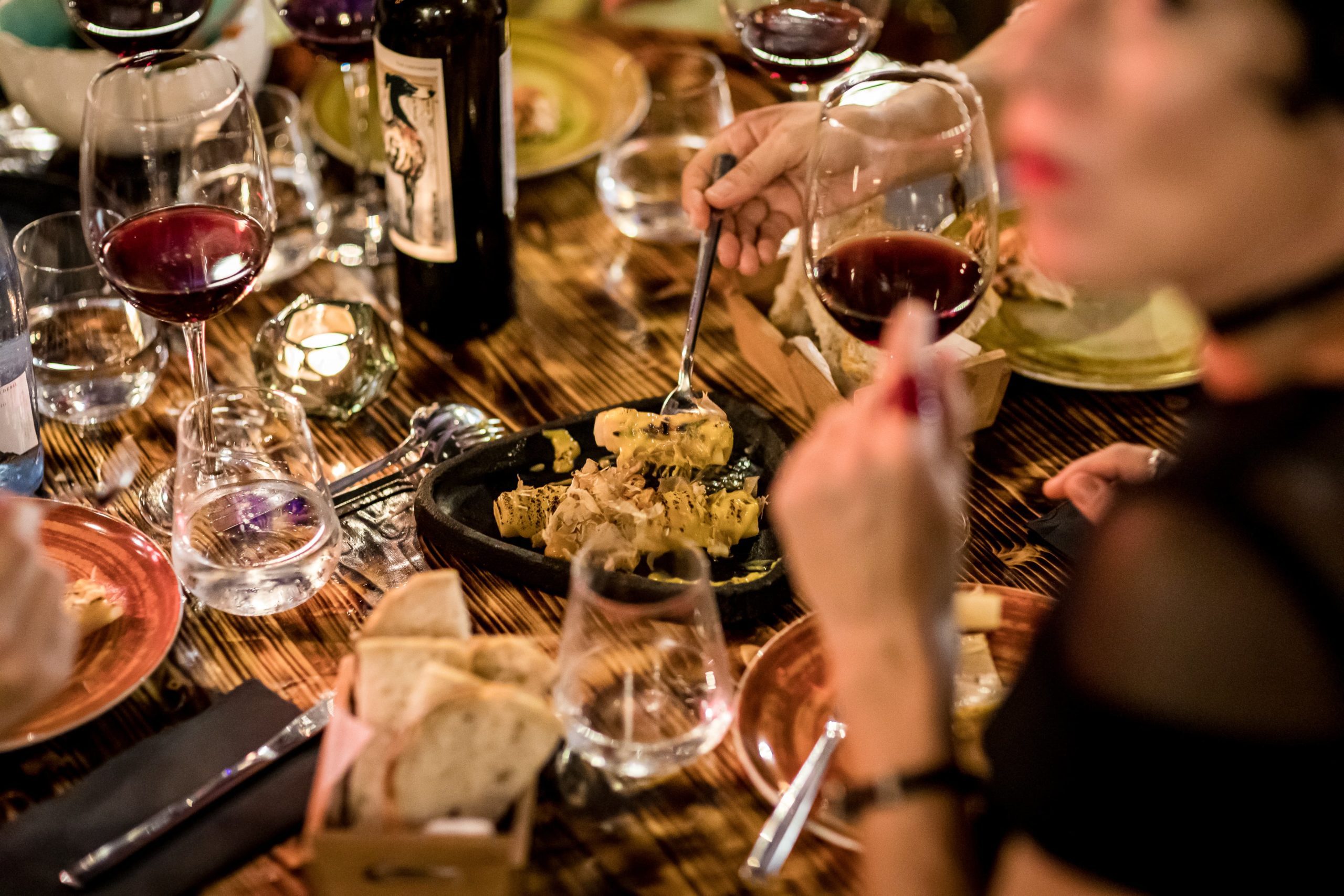
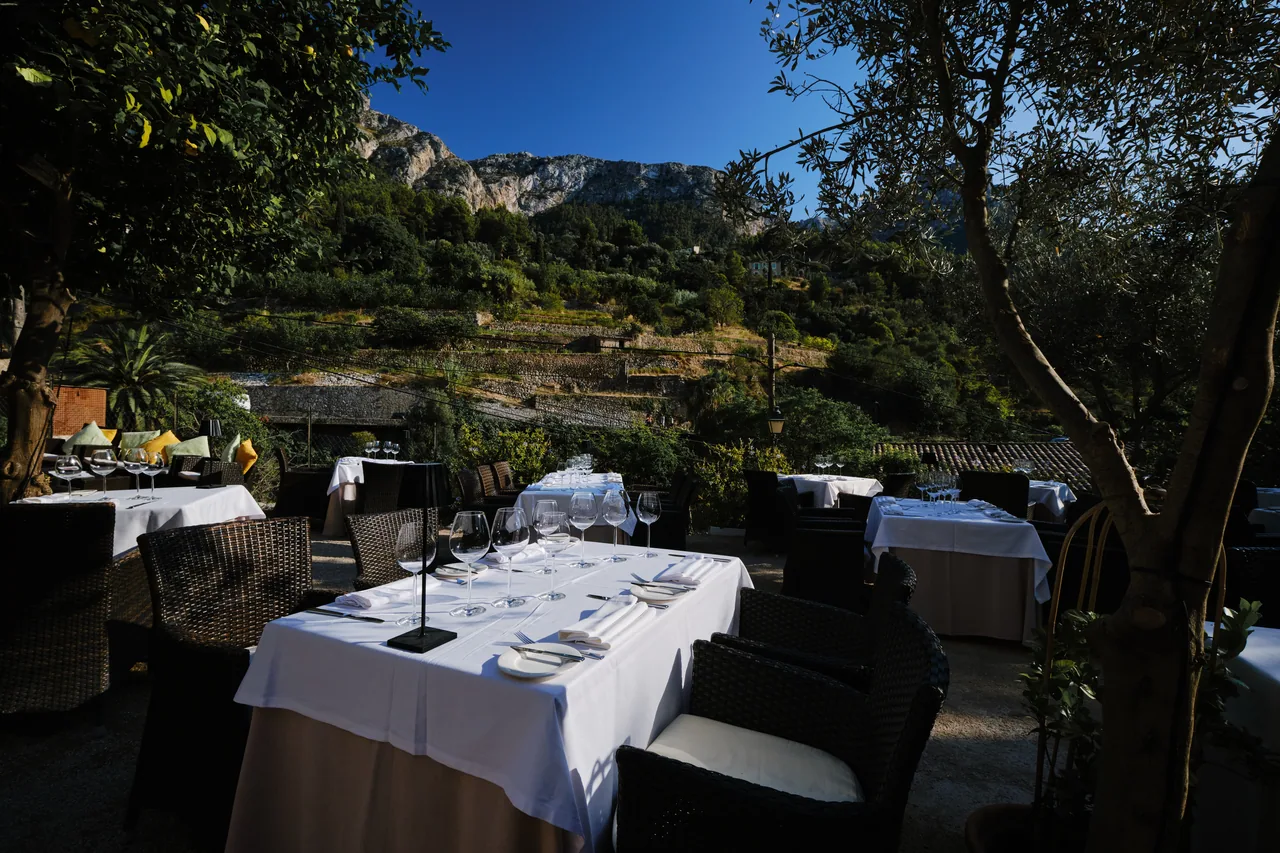
Before dinner, before the crawl, there is the aperitif — a cold glass of txakoli poured from on high and a single salty skewer named after a Rita Hayworth film. Learn the ritual and you have the key to the whole evening.
Every great eating night in San Sebastián begins the same way, and it begins small: one skewer and one glass, taken standing, sometime in the early evening before the real meal. The skewer is the gilda; the glass is txakoli. Together they are the overture — the first taste that wakes the palate, sharpens the appetite and signals that the evening has officially begun. Skip it and you have started in the middle of the story.
The gilda is the oldest pintxo of all and arguably the simplest: a green olive, a couple of salt-cured anchovies, and a pickled guindilla pepper, all run through with a single toothpick. The story goes that it was invented at Casa Vallés, a historic bar in the Centro, in the 1940s, and named for the Rita Hayworth film Gilda — because, like the character, it was said to be green, salty and a little spicy. Whether or not the legend is exact, the bite is perfect: briny, sharp, a jolt that makes the next sip taste better. Eat it in one go.
Txakoli is the wine that was made to go beside it — a young, bone-dry, faintly sparkling white from the steep vineyards of the Basque coast, low in alcohol and high in acid, made to be drunk cold and fast rather than contemplated. The theatrical pour is part of the ritual: the bartender holds the bottle high above a wide, flat glass and lets the wine fall in a long thin stream, aerating it and waking up the slight prickle of carbon dioxide. It is showmanship, but it is also genuinely how the wine tastes best.
Casa Vallés remains the place to begin if you want the gilda at its source — a proper old institution where the recipe was born, with the unhurried, slightly formal air of a bar that has been pouring vermouth and txakoli for generations. From there, Antonio Bar in the Centro carries the torch for the refined version of the aperitif: a chef-driven pintxos bar where the classics are made with real precision and the txakoli list is taken seriously. Either one is the correct first stop of the night.
As the evening deepens, the aperitif gives way to the cocktail, and Gros and the Centro are where that shift happens. La Gintonería Donostiarra is the city's gin-and-tonic temple, where the drink is built with theatrical care over a vast spread of botanicals, while the more intimate Garbola pours serious craft cocktails in a small, local room that locals guard a little jealously. These are the places you drift to once the gilda has done its work and the night wants something longer and stronger.
Two notes to carry it off like a local. First, the aperitif is fast and vertical — you stand, you order one gilda and one short glass, and you do not settle in; the whole point is to wake up and move on to the next thing. Second, the gilda is best chased, not lingered over: one bite of the skewer, one cold mouthful of txakoli, and you are ready for the crawl proper. Lively, classic counters like Atari Gastroteka and Bar Sport will happily serve you both at almost any hour, but the magic time is the early evening, when the light is gold over the bay and the whole city is reaching for its first skewer at once.