Drive ten minutes from the rim and Santorini changes its accent entirely — vine-stitched villages, square tavernas, no sunset surcharge. Where the people who live here actually book a table.
There are two Santorinis, and they are separated by about a ten-minute drive. One faces the caldera and prices accordingly. The other turns its back to the famous drop and gets on with the business of being a small Greek island — vine fields trained low against the wind, whitewashed villages built inland precisely so the pirates couldn't see them, and tavernas where the only view is the one across the table. This is the island the people who work the first one go home to.
The pilgrimage starts at Metaxi Mas, in the hamlet of Exo Gonia, tucked beside the church of Agios Charalambos where you would never find it by accident. It is a Cretan-Santorinian taverna that has quietly become an institution, and it stays an institution because the cooking — slow-braised goat, the island's fava, vegetables that taste of the soil they came out of — never started chasing the tourist euro. Book it, because everyone who knows, knows. The locals included.
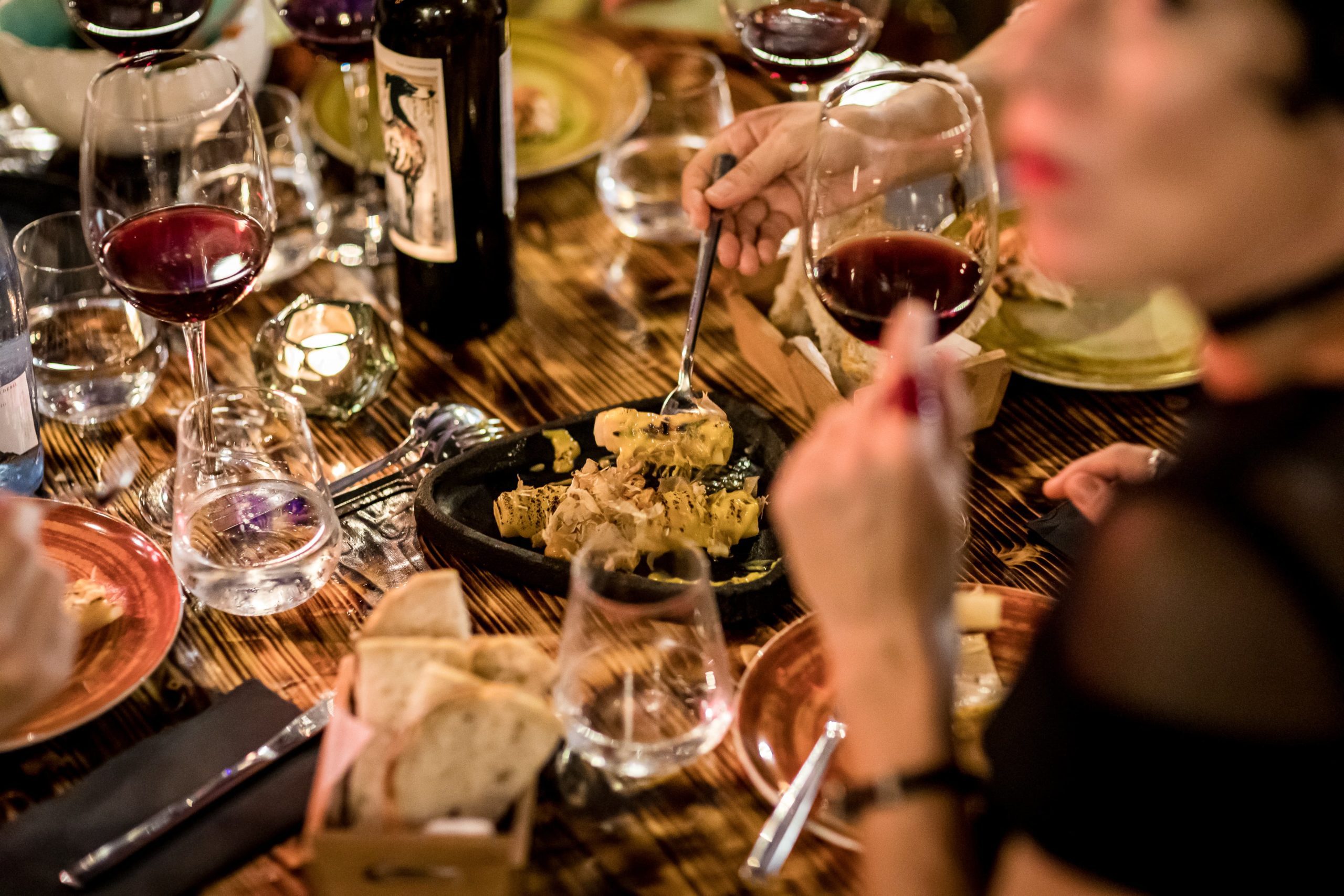
Up in Pyrgos — the old island capital, a labyrinth climbing to a Venetian kastro — the village-square model is alive in two registers. Penelope's Ouzeri is the family-run ouzeri done properly: small plates, ouzo on ice clouding in the glass, the unhurried mezedopoleio rhythm that the caldera terraces have entirely forgotten how to keep. Kantouni, on the square itself, is the even simpler proposition — a taverna where you sit, you point, you stay too long, and nobody hurries you toward a sunset slot.
Mesaria, a workaday village most visitors only pass through on the way to somewhere prettier, hides Pentozali — a Cretan mezedopoleio that locals trade as a near-secret. It is exactly the kind of room that does not exist on the rim: no sea, no theatre, just mezedes and the sense that you have been let in on something. Treat it as the reward for getting off the obvious road.
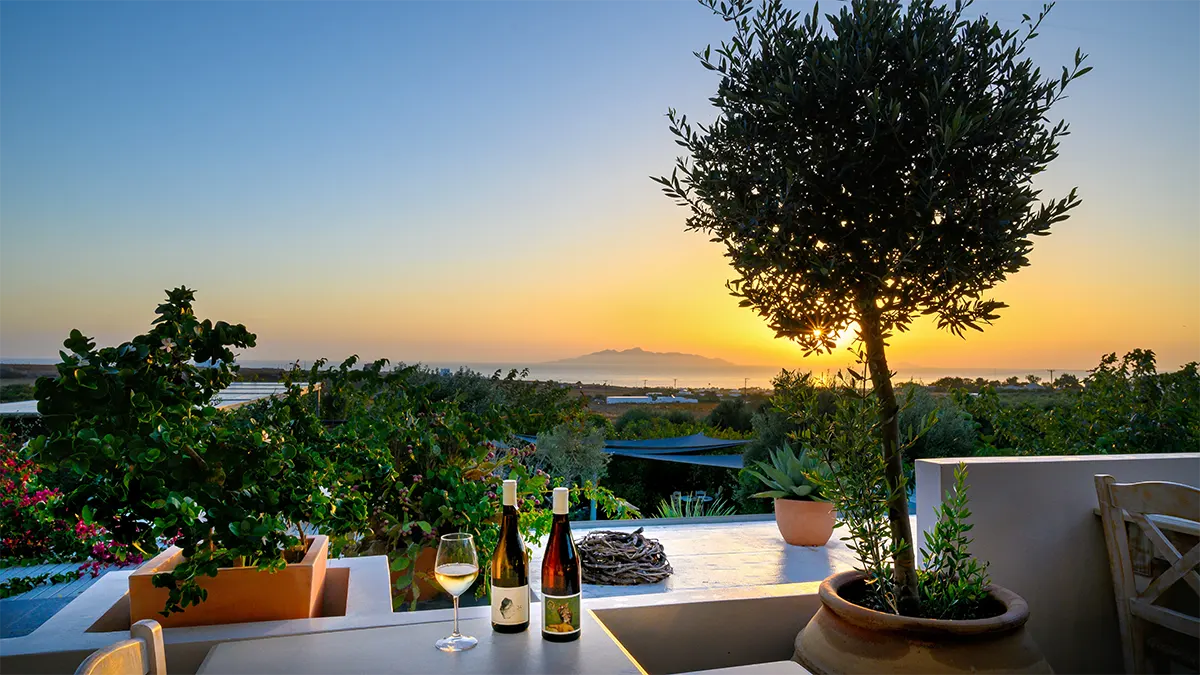
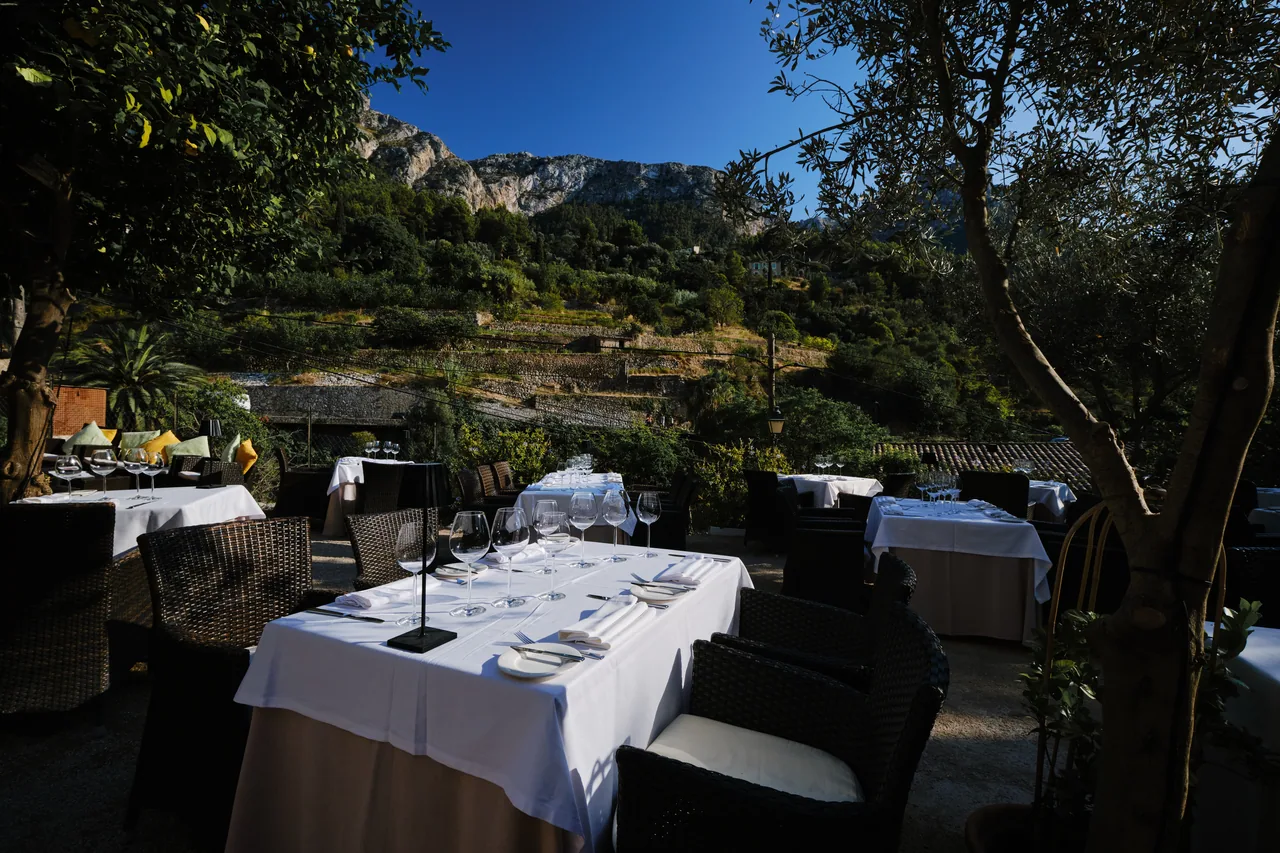
If you want the inland mood with a glass of something serious, the wine villages oblige. Cava Alta occupies a restored winery in Pyrgos — stone, cool air, a Mediterranean kitchen that suits the bottles — while Aroma Avlis, back near Exo Gonia, runs a farm-to-table garden table inside a working winery, the kind of long lunch that dissolves an afternoon. Neither sells you a sunset. Both sell you the actual island.
The honest advice for a week here: spend your money on the rim once or twice, for the spectacle, and eat everything else inland. The food is better, the prices are sane, and you go home having met the Santorini that does not perform for anyone.