Before Madrid had Michelin stars it had tabernas — zinc counters, vermouth on tap, and a way of feeding the city that a hundred years has only sharpened.
There is a particular sound that defines old Madrid, and it has nothing to do with traffic or guitars. It is the clatter of a marble counter, the hiss of vermouth from a brass tap, the unhurried scrape of a knife through a wheel of manchego. This is the taberna — not a restaurant, not a bar, but something older and more essential, a room where the city has come to eat, argue and pass the afternoon since long before anyone thought to award stars.
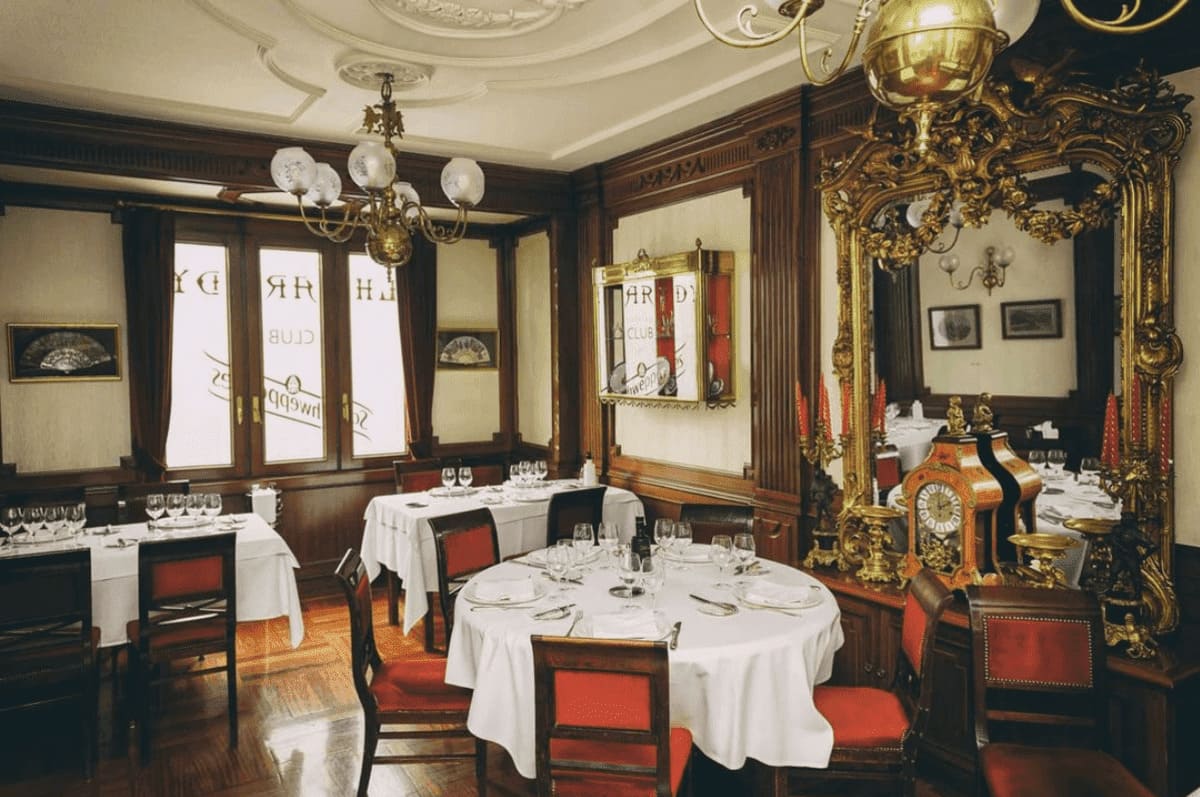
Casa Alberto, founded in 1827 on the street where Cervantes once lived, is among the truest survivors. Its rabo de toro and its house vermouth have changed so little that to sit at its counter is to taste the nineteenth century with no museum varnish on it. A few streets away, Lhardy has kept its mahogany and its consommé since 1839, a more formal cousin to the taberna tradition but cut from the same cloth — the conviction that hospitality is a craft worth practising for two centuries without losing the thread.
The genius of these places is that they never aimed to be charming, and so they became indispensable. Casa Revuelta serves one thing supremely — bacalao fried in a batter so light it seems to float — and serves it to a crush of regulars who have been ordering it the same way for decades. Casa Labra, where the Spanish Socialist Party was quietly founded in 1879, still hands its salt-cod croquettes across a counter that has heard more history than most parliaments. These are casas de comidas in the original sense: houses of food, where the food is the only manifesto.
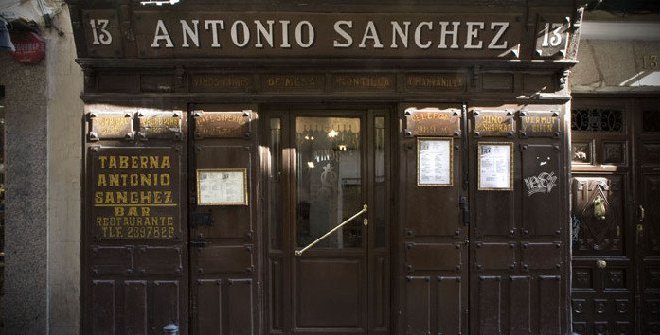
What the visitor from Istanbul will recognise instantly is the register. The meyhane and the taberna are first cousins — neither is about luxury, both are about continuity, about a table that holds because it has always held. Taberna Antonio Sánchez, claimed by some to be the oldest in the city, hangs bullfighting relics on walls cured by a century of cigarette smoke and conversation, and still pours its vermouth as if nothing has happened outside since 1830.
To eat your way through these rooms is to understand that Madrid's avant-garde did not arrive from nowhere. It grew from this soil — from kitchens that respected the ingredient, the regular, and the long afternoon. The taberna is the city's memory, kept not in a vitrine but on a plate, and renewed every single day by the simple act of someone walking in and asking for the usual.