Parmigiano, traditional balsamic, culatello di Zibello — Emilia's holy trinity isn't made in a factory, it's made in fog and cellars and attics. The most rewarding meals in the region are the ones you drive an hour out of the city to reach.
Emilia is a larder before it is anything else, and its greatest products refuse to be hurried or industrialised. Parmigiano-Reggiano needs the milk of one valley and the patience of years; traditional balsamic vinegar of Modena needs a battery of shrinking barrels and an attic that bakes in summer and freezes in winter; culatello di Zibello — the heart muscle of the prosciutto, salted, tied into a bladder, and aged in river fog — needs the Po lowlands and nothing else on earth will do. The lesson of any serious week here is that you should drive to the source. The producers who do it best have, almost without exception, opened a table.
The pilgrimage's cathedral is Antica Corte Pallavicina at Polesine Parmense, on the bank of the Po. The Spigaroli brothers age their culatelli in the cellars of a fourteenth-century riverside castle, the damp and the fog doing the slow work no machine can fake; the restaurant upstairs holds a Michelin star and lets you taste culatelli of different ages side by side, like vintages. To eat the eighteenth-month culatello within sight of the cellar that made it, with the river mist rising outside, is to understand terroir as a thing you can chew. It is a destination in the fullest sense — you go there on purpose, and you remember it for years.
Twenty minutes away at Colorno sits the more intimate, more rustic half of the same world: Al Vèdel, a family trattoria that has been feeding this corner since 1780 and cures its own culatello in the cellars below the dining room. Where Pallavicina is a refined occasion, Al Vèdel is the working farmhouse version — generous, unhurried, deeply Parmense, the kind of long Sunday lunch that ends with the owner bringing you a last sliver of something off the bone because he can see you understood the meal. Pair the two on the same trip and you have the whole register of culatello, from castle to kitchen.
Then turn east and climb into the hills of Castelvetro di Modena for the balsamico half of the trinity. Opera02 is an acetaia — a working vinegar estate — with a restaurant and rooms perched in the Lambrusco vineyards. You can tour the acetaia's attic, see the diminishing series of barrels in chestnut, cherry, juniper and oak, and then eat a menu built to showcase the real, traditional, decades-aged balsamic: a few drops on Parmigiano, on a sformato, even on gelato, where the supermarket impostor would be a travesty. It reframes a word most visitors think they understand.
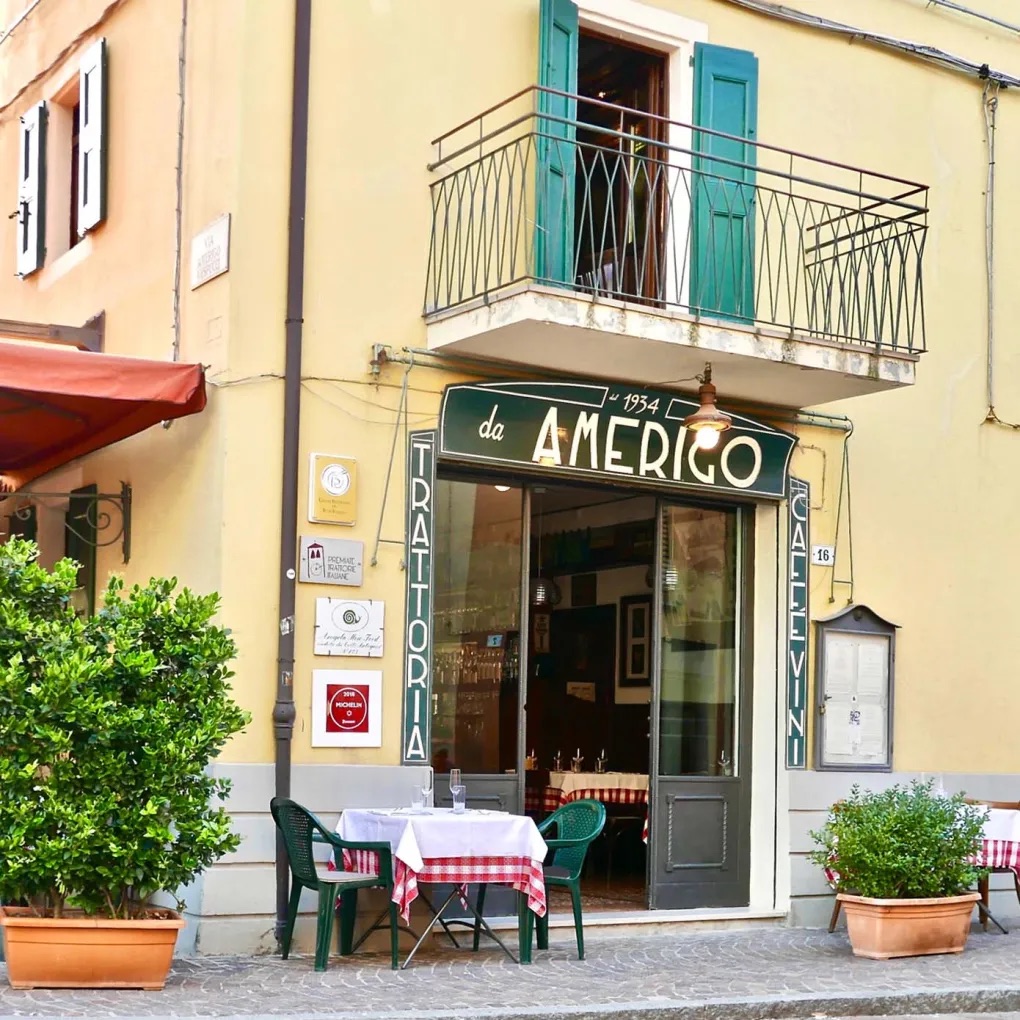
For truffles — Emilia's wilder, more seasonal treasure — the road leads to Savigno in the Apennine foothills southwest of Bologna, white-truffle country, and to Trattoria da Amerigo. It is a century-old village inn that earned a Michelin star without abandoning its bones: an osteria-shop downstairs, a kitchen that treats the local tartufo bianco with the reverence it deserves, and a cellar of remarkable depth. In autumn it is one of the great truffle tables of Italy hiding in a hamlet of a few hundred souls — exactly the kind of place this region rewards you for seeking out.
If you cannot spare the driving days, Bologna's Quadrilatero — the medieval grid of food shops behind Piazza Maggiore — is the concentrated version. Tamburini is the historic salumeria-and-tavola-calda where you can taste the region's cured meats and stuffed pastas without leaving the city, a Bologna institution that has anchored the market for generations. A few steps away, Salumeria Simoni cuts tasting boards of culatello, mortadella and Parmigiano to eat standing with a glass of Lambrusco, the city's most honest fast lunch.
But treat the shops as an appetiser, not the meal. The thing that makes this corner of Italy unlike anywhere else is that the food and the land are the same fact: the fog that ages the culatello, the attic heat that thickens the balsamico, the oak woods that hide the truffle. You can buy the products anywhere now. You can only eat them in their own light here, and the hour you spend driving to Polesine or Castelvetro or Savigno is not a detour from the trip — it is the trip.