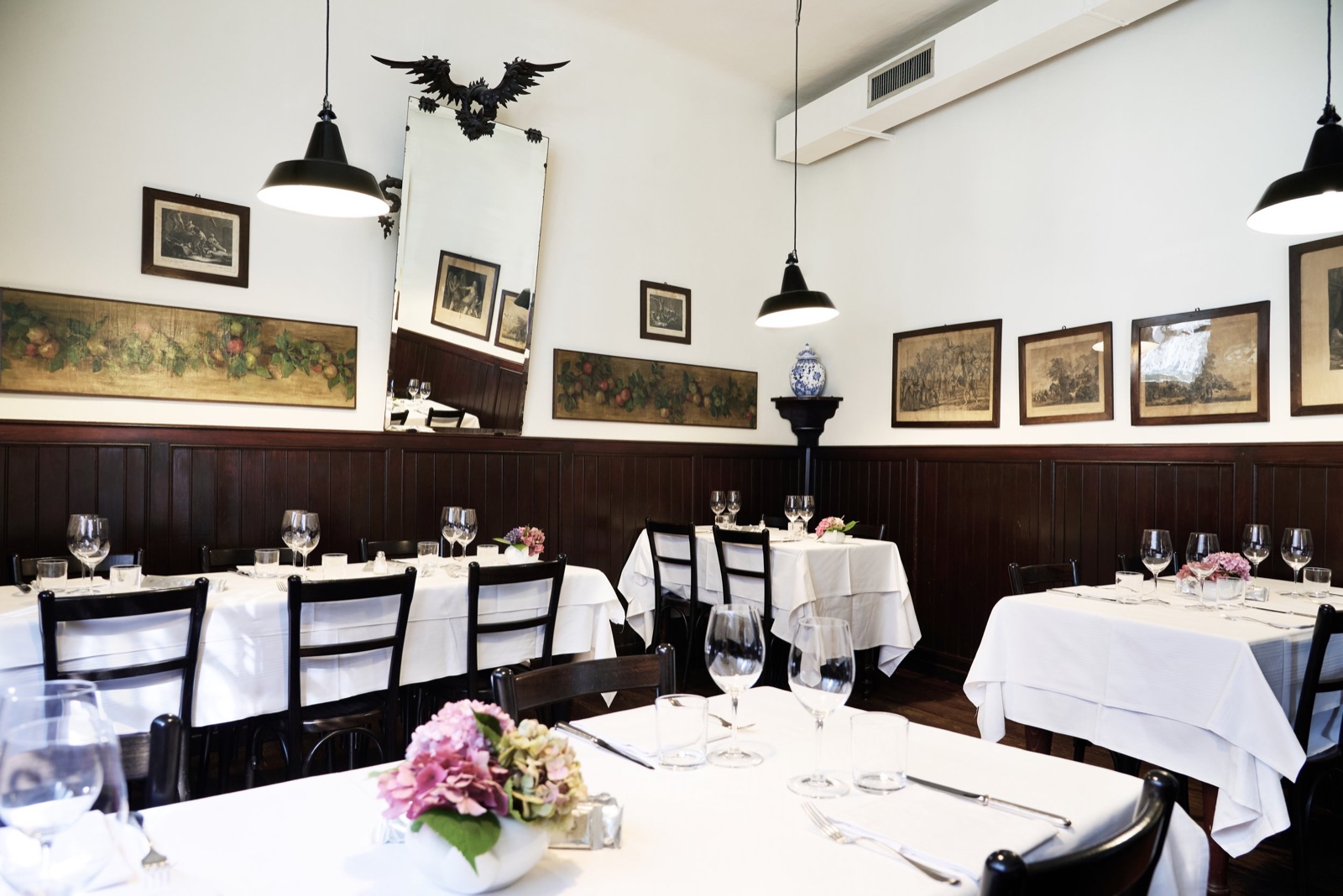
Beyond the postcard risotto lies the real Milanese table: the neo-trattorie and quinto-quarto rooms where the city eats offal, marrow and braises with no ceremony and total conviction.
Milano has a reputation for being austere about food, and it is half-deserved. The city built its fortune on finance and fashion, not on showing off at the table. But that restraint produced something more interesting than spectacle: a cooking culture that prizes the parts other cities throw away, and serves them in rooms that have not changed their wallpaper in forty years. The Milanese do not eat to be photographed. They eat tripe.
The clearest expression of this is the quinto quarto, the 'fifth quarter,' the offal and trim left after the four prime cuts are sold. Trattoria Trippa, in Porta Romana, took its name from the dish and built a whole grammar around it: vitello tonnato cut thick, fried tripe, a Milanese cutlet the size of a serving platter. It is loud, packed, and entirely unsentimental, which is exactly why it works. Dongiò, a few streets over, does the Calabrian version of the same honesty, 'nduja and house pasta in a room that feels borrowed from someone's grandmother.
Then there are the keepers of the older flame. Trattoria Masuelli San Marco has been run by the same family since 1921, and the menu reads like a constitution: risotto al salto, ossobuco with the marrow intact, a wine list that rewards patience. Antica Trattoria della Pesa, near Isola, occupies a former customs weigh-station and serves cassoeula, the pork-and-cabbage braise that is Milano's true winter dish, with the seriousness it deserves. These are not revivals. They simply never stopped.
Da Berti, also in Isola, sits somewhere between the two camps: a courtyard institution old enough to feel inherited, confident enough to plate a perfect cotoletta without commentary. What unites all of them is a refusal to perform. The bread is unremarkable, the lighting is whatever it is, and the cooking is the entire point.
If you want to understand Milano through one meal rather than one monument, this is the route. Book Trippa weeks ahead, walk into Masuelli on a weeknight, and order whatever the table next to you is already eating. The city does not hide its best food. It simply assumes you already know where to look.