Septime is the headline. Around it, in a six-block radius east of Bastille, sit the rooms that fill the rest of the trip when the headline is sold out. The actual neo-bistro circuit, in the order an İstanbullu should walk it.
The mistake the first-time Paris booker makes with Septime is treating it as a standalone reservation rather than as the head of a circuit. The booking opens 21 days out at 10:00 Paris time and closes within two minutes, this much is on every guidebook. What the guidebook does not say is that the failure to land that booking is, in practice, a non-event. The eleventh arrondissement was rebuilt around Septime over the past decade, and the rooms within a five-minute walk of 80 rue de Charonne now hold what is functionally a single shared kitchen culture: chef-led, weekly menu, natural-wine list, thirty seats, the people who used to work at Septime running the next room.
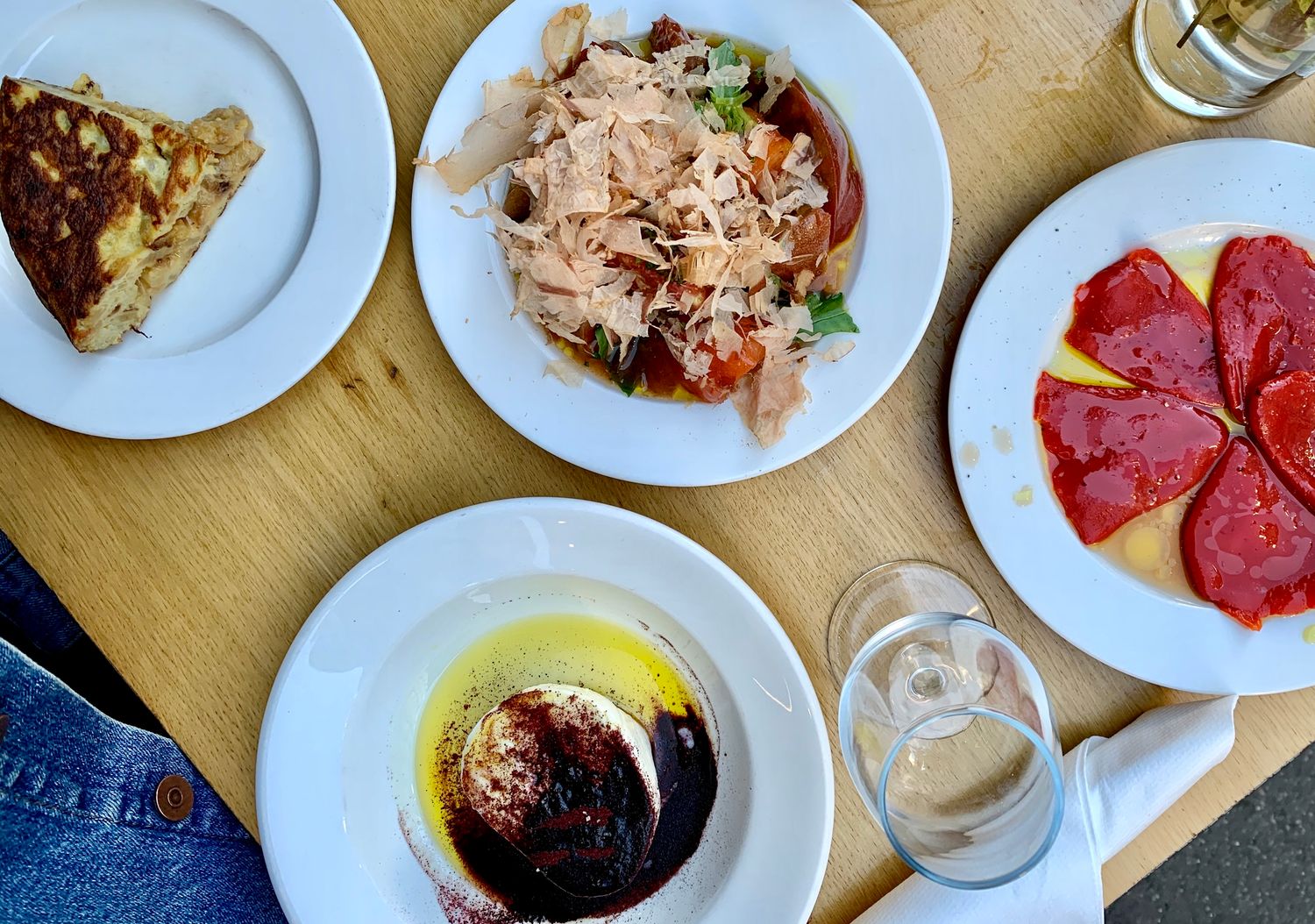
The ladder, in operating order, looks like this. Clamato is two doors down from Septime, also from Grébaut and his partner Théophile Pourriat, no reservations, walk in at 19:00 sharp, oysters and crudo with a glass of pet-nat, you sit at the marble counter and the chef passes plates over your shoulder. The room is half the size of Septime and runs at half the price. If Septime is closed for August or you missed the booking, Clamato does not feel like a consolation. It feels like the same kitchen, faster.
Le Servan is the next rung up the avenue Parmentier, Tatiana and Katia Levha's Franco-Filipino room, opened 2014, weekly tasting menu with a Manila side that the audience will not have eaten in Istanbul. Lunch is the order: forty euros for three courses, the wine list opens early, the dining room fills with the kind of locals who used to book Septime for lunch before lunch was discontinued. Reservations are required and they go three weeks out, but not in a panic. Tuesday and Wednesday lunch is the trick.
Le 6 Paul Bert is the polished elder of the same neighbourhood, Bertrand Auboyneau's room one street over from his own Bistrot Paul Bert, with a more formal tasting menu and a wine list that runs deep on Loire and small Bourgogne. The room itself is older, the service less millennial, and the bill twenty per cent over Septime's. This is the substitute booking when the trip has a third dinner that needs to land somewhere serious and Septime has already happened.
Aux Deux Amis on rue Oberkampf is the after-dinner stop the same circuit uses, David Loyola's natural-wine bar in a former butcher's shop, open since 2010, no booking, you arrive at 22:00 and stand at the counter with a glass of orange wine and a plate of beef tartare or pickled mackerel. The room runs late and loud. This is the room that does not appear on the original Septime booking but is half the reason the audience returns to the eleventh.
Up the road from Aux Deux Amis, Au Passage holds the same register on a more pinned-down format, a long narrow room with a chalkboard menu and the natural-wine list that the Paris cave-à-manger generation built itself around. Booking is required for dinner; lunch you can walk in. The room has been the training ground for half the chefs now running their own kitchens in the eleventh.
Then the deeper bench: Le Saint-Sébastien (Tomy Gousset's casual room, Bib Gourmand 2026), Mokonuts (Moko Hirayama and Omar Koreitem's lunch counter, the cookies the city talks about), Géosmine (Maxime Bouttier's one-Michelin precision-bistro that the audience misses because it is east of even Charonne). Each one extends the circuit by one walking block.
The way to use the ladder, on a four-night Paris trip with the eleventh as the base: book Septime first, three weeks out at 10:00 Paris time. Take whatever night they give you. Plan the second night as a Le Servan lunch followed by Le 6 Paul Bert dinner, the two-meal day that anchors the trip. The third night runs Clamato at 19:00 then Aux Deux Amis at 22:30. The fourth night is the recovery: Mokonuts lunch, Au Passage dinner.
The reason this ladder matters more than the headline is that the eleventh has been working as a single ecosystem for fifteen years. Chefs trade staff between the rooms; the wine importers run the same accounts; the produce comes from the same Terroirs d'Avenir van. The İstanbullu who books only Septime gets one chapter of the story. The İstanbullu who books the ladder gets the actual neighbourhood the chefs themselves live in. The bill, across all four nights, comes in under what a single Le Cinq dinner costs. The food, across all four nights, is what people come to Paris for now.