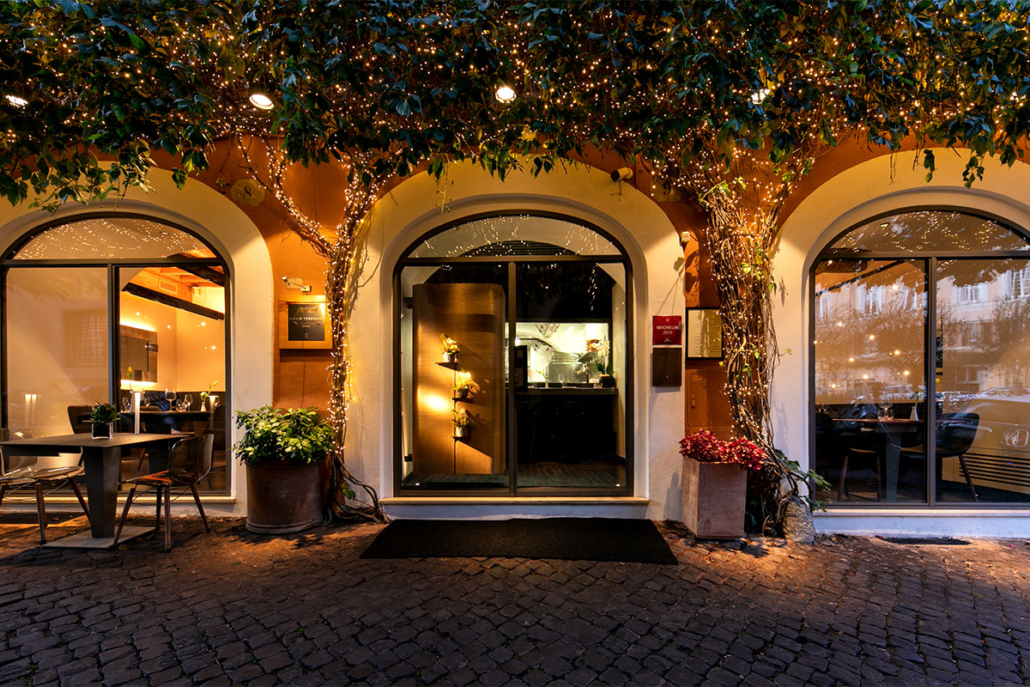
Rome has never chased Michelin the way Milan or Modena have, which makes the kitchens that do earn the stars here all the more deliberate. A guide to the city's serious tasting tables, from the historic centre outward.
Rome's relationship with the Michelin guide has always been ambivalent. This is a city that fundamentally believes its best food is a plate of cacio e pepe in a paper-tableclothed trattoria, and it has never felt the need to chase stars the way the industrial north does. The upside, for the visitor, is that the kitchens which do reach for fine dining here tend to be unusually deliberate, they have to justify themselves against a culture that is skeptical of the whole enterprise.
In the historic centre, Il Pagliaccio is the long-standing reference: two Michelin stars, the chef Anthony Genovese cooking with a precise, lightly Asian-inflected modernism that has held its level for years in a discreet room near the Tiber. A short walk away, Per Me Giulio Terrinoni built its reputation on the tasting of 'fragments', small, sharply conceived courses that lean hard on the chef's mastery of seafood, and remains one of the most personable serious tables in the centre. Il Convivio Troiani, run by the three Troiani brothers since the 1980s, is the old-guard fine-dining house that taught much of this generation what ambition looked like in Rome.
Beyond the centre, the picture broadens. Pulejo, in Prati, is the newer arrival generating the most serious conversation, a young chef's precise, confident cooking that earned a star quickly and reads as the city's most promising fine-dining debut in years. In Parioli, Metamorfosi gives Roy Caceres a stage for a more inventive, internationally-minded menu, the kind of cooking that quietly proves Rome can hold its own against any capital. And in Trastevere, Glass Hostaria carries its star up a side lane with a contemporary kitchen that refuses to trade soul for technique.
A few honest caveats. Rome's most famous starred rooms, the rooftop temples of the grand hotels, are genuinely accomplished but sit firmly on the visitor circuit, and you pay as much for the view and the marble as for the plate. The tables above reward a different instinct: book them because the cooking is the point, not because the room photographs well. Reserve well ahead, especially for the two-star rooms, where a few weeks' notice is the minimum.
The right way to use fine dining in Rome is as counterpoint, not as the spine of a trip. Spend your days in Testaccio and Trastevere learning what the city actually tastes like, then give one evening to a kitchen that has earned the right to reinterpret it. Eaten in that order, the tasting menu lands as a conversation with the tradition rather than an escape from it, which is exactly how Rome, at its most skeptical and most generous, would want you to read it.