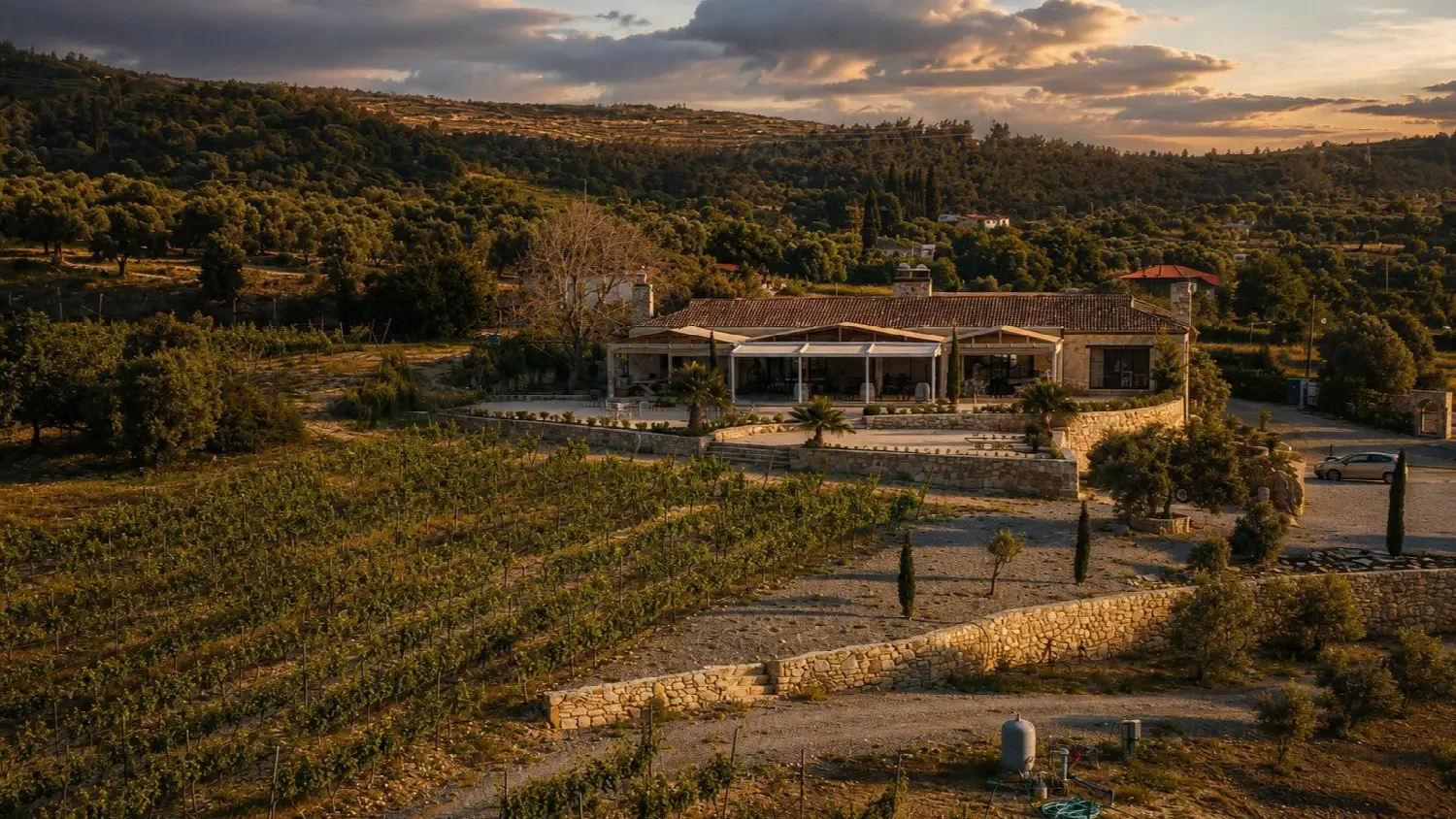
Most Istanbul houses close their stone houses by mid-October and forget Alaçatı until June. The mistake is in the calendar reading. The peninsula's quiet October-November window is the village's actual best season, and the rooms that stay open through it are the ones the locals were eating at all summer.
There is a calendar rule among the Istanbul houses that have summered in Alaçatı for fifteen years and which most newer arrivals miss entirely. The conventional wisdom is that the village runs from May through September, peaks in July-August, and closes by mid-October when the last of the cottage-rentals turn off the water. The conventional wisdom is half right. The village does close many of its rooms by October. But the four weeks between mid-October and mid-November are the peninsula's actual best moment, the light is perfect, the wind has dropped, the day-trippers are gone, the kitchens are unhurried, and the producers who summer in the village are still eating in it. The houses that have figured this out treat October as the secret season and book accordingly.
The first rule of October Alaçatı is to know which kitchens stay open. Asma Yaprağı runs through the end of November and is at its quietest and best in the second half of October, the kitchen has time, the wine list runs deeper into the cellar reserves, the table you wanted in July is the table you can walk into in October. Imren Lokantası, the Aegean home-cooking room that anchors the village's daytime register, runs all year. Most of the producer-restaurants on the Tokoğlu plateau extend through November and the lunch programmes get more interesting once the August-September wedding circuit is over.
The second rule is to read the wind. Alaçatı's summer is built around the meltemi, the prevailing northern wind that defines the windsurfing economy and dictates which terraces are used in the evening. By mid-October the meltemi has eased. The terraces that are wind-protected in summer become open in autumn, and the rooms that were impossible to seat outside in August because of the wind are the rooms with the best November light. This particularly applies to the harbour-side restaurants in Çeşme and to the vineyard tables on the Tokoğlu plateau, both of which run a different programme once the wind is off.
The third rule is the produce calendar. October on the peninsula is the figs, the late melons, the first of the autumn olives, the new-pressing olive oil, the mantar (wild mushrooms) the village grandmothers gather from the back roads, and the first of the kestane (chestnuts) coming down from the inland hills. November adds the late-pressing oils, the ot mezesi greens that the heat killed in August, the autumn fish, the lüfer running through the Çeşme strait, and the new wines from the harvest just past. The kitchens that lean into the seasonal calendar, Asma Yaprağı, Mozaik, the smaller plateau rooms, are at their most ambitious in this window because the produce is genuinely better than the August equivalent.
The fourth rule is the room. October Alaçatı is unhurried in a way August Alaçatı cannot be. The kahvaltı evi that takes a forty-minute queue in July seats you in ten in October. The producer-restaurant that took a six-week booking lead time in August takes a two-day one in November. The waiter who was shouting orders across a packed terrace in summer has time to walk you through the wine list in autumn. This is the season the rooms were originally built for, before the village became a destination, when the meltemi-driven summer was the working economy and the autumn was the village's private time. Something of that older rhythm survives in October.
The houses who have read the calendar correctly book a four-day October trip into the bag for early-November every year and treat it as the proper Alaçatı visit. The summer crowd is gone, the produce is at its best, the terraces are open, the wines are new, and the village reverts to the working pace it ran on for the eighty years before the boat-shoe crowd arrived. This is the peninsula at its most useful, and it is the season the locals quietly keep for themselves.